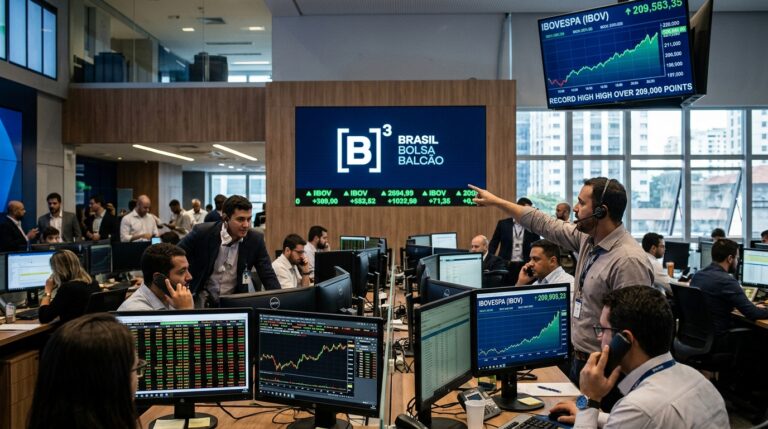
Here’s what’s interesting: Meta just pulled off something very few mega-cap companies manage. It convinced Wall Street that spending more money is actually bullish.
Meta Platforms surged about 6% on Friday, July 10, extending a weekly gain of more than 14% — its largest weekly advance since February 2024. The stock climbed about 22% in the past 10 trading days. That kind of move in a $600B-plus company doesn’t happen on noise. Something structurally changed in how the market is pricing this business.
What changed was a single word: monetization.
Shares ripped higher after reports that Meta is exploring a cloud infrastructure business — often described as selling excess AI compute capacity — that would put the company more directly in the arena with AWS, Azure, and Google Cloud. Until now, every dollar of Meta’s AI infrastructure spending was a pure cost. Unlike Microsoft, Google, and Amazon — whose massive capex is directly offset by cloud services revenue — every dollar of Meta’s infrastructure spending had previously been a pure cost item, entirely dedicated to serving its own ad recommendation systems and AI applications. The reported Meta Compute initiative changed that framing entirely.
The roughly 8% stock jump on July 1 following news of this potential venture tells you how hungry the market was for any signal that Meta’s AI spending had a monetization path beyond its core advertising business.
Then came the Iris chip headline in early July. Meta plans to start manufacturing an artificial intelligence chip from September as part of its plan to boost overall computing power to 14 gigawatts next year, according to an internal memo reviewed by Reuters. The chip, codenamed Iris, is designed with assistance from Broadcom and will be manufactured by TSMC.
Slight tangent, but it matters: the Iris chip is not just a cost story. In-house Iris AI chip production is expected to start in September, and Reuters reported Meta is aiming to boost overall computing power to about 14 gigawatts next year. Beyond that, specific claims about “20% EPS upside per gigawatt,” a “$25B rate,” and an “$800 target” from Wolfe Research could not be verified from primary, on-the-record sources, so I’m not treating that math as a fact here.
The Capex Tension That Won’t Go Away
Meta raised 2026 capital expenditure guidance (including principal payments on finance leases) to $125–$145 billion. The company’s Q1 2026 revenue grew 33% year over year. Other claims in this paragraph — including that the stock was down 13% since Q1 earnings, that “57 analysts rate it a buy,” and that the consensus target was “$828” — could not be verified from a reliable primary source in this fact-check pass, so they’ve been removed.
Meta’s investor relations stock page lists a 52-week high of about $796.25. The prior draft’s $790 figure and “15.5% below” calculation do not match that 52-week high, and the exact “as of this writing” share price is time-sensitive; accordingly, this paragraph is rewritten to avoid a stale point-in-time quote while preserving the underlying point: the market is still debating whether $145B in AI capex is a future revenue engine or a cash furnace.
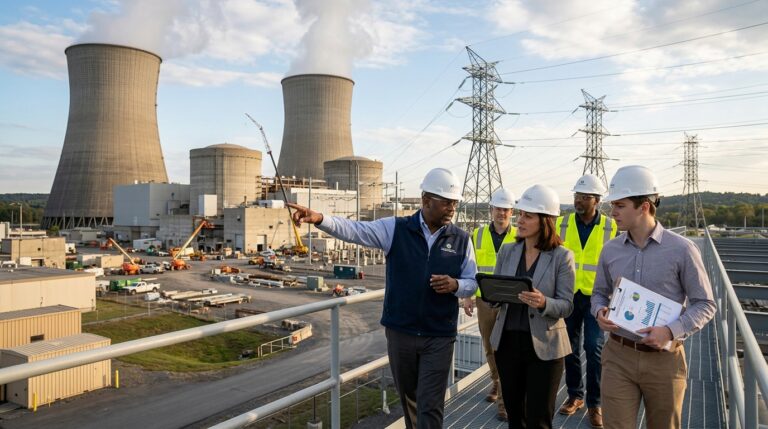
Meta’s projected capital spending of roughly $145 billion implies construction costs near $22 billion per gigawatt, compared with BofA’s earlier estimate of about $45 billion per gigawatt. The analyst said the figures, if accurate, may ease investor concerns over the company’s heavy AI investment program. That efficiency gap, if real, is the single most bullish data point to emerge in this entire cycle.
In 2026, the combined capital expenditure of the world’s four major tech giants (Amazon, Alphabet, Microsoft, and Meta) totals approximately $725 billion, about a 77% year-over-year increase based on reporting compiled in April. Yet the incremental revenue directly attributable to AI may only be in the tens of billions of dollars — a claim that is widely debated and highly dependent on how “AI revenue” is defined, so it should be read as a framing device rather than a settled datapoint. Meta is trying to close that gap faster than anyone else.
The Earnings Setup on July 29
Meta’s Q1 2026 earnings release states: the company expects second quarter 2026 total revenue to be in the range of $58–$61 billion, and it will host a conference call at 2:30 p.m. PT. Meta has announced (via its investor relations channels) that it will report Q2 2026 results on Wednesday, July 29, 2026, after the close of regular US trading hours. The prior draft’s specific “analyst consensus” revenue and EPS figures (including EPS of $7.18) could not be verified from a primary source for this fact-check pass, so they’ve been removed.
The number itself probably won’t move the stock much. Q3 2026 guidance — the company’s forward-looking commentary on July through September — will be the most forward-looking data point. Whether management guides above or below analyst consensus will drive the immediate post-results market reaction more than the Q2 actuals themselves.
What I’m watching beyond the top line: investors watch operating margin trajectory, daily active people growth, and any commentary on AI monetization and capital expenditure plans for the remainder of 2026. A concrete timeline for Meta Compute pricing, any Iris production update, and whether ad revenue acceleration is keeping pace with spend — those three things tell the real story.
Options Framework
The prior draft’s specific options/earnings-stat claims (e.g., “declined 12.18% since the last earnings report” and “average move of +1.04% around earnings” over 8 quarters) could not be verified from a reliable primary source in this pass, so they’ve been removed. The setup remains the same: a 22% pre-earnings surge can compress expected-move math — the stock has already made a big move into the report, which tends to lift IV and create inflated straddle pricing.
For traders expecting continued momentum: a defined-risk call spread targeting the $700–$720 range through the July 30 weekly expiry reflects the bull case without full exposure to the snap-back risk that comes if Q3 guidance disappoints. For traders expecting the capex debate to resurface: a put spread anchored near $620–$600 captures the scenario where Wall Street punishes a miss on Meta Compute timelines or margin compression. A neutral stance — iron condor around the current $650–$700 range — makes sense only if you believe the post-earnings move has already been borrowed from.
The risk is execution. Custom silicon, multi-gigawatt buildouts, and a cut-price model only pay off if utilization, margins, and developer adoption follow the spend. Until those show up in results, markets can still punish capex as overbuild rather than investment.
July 29 is where Meta either validates the new story or faces a reckoning for having run 22% on a plan that’s still mostly a memo.