Most utilities pitch data center growth as a future opportunity. Southern Company (SO) just got 3,200 megawatts of it under contract.
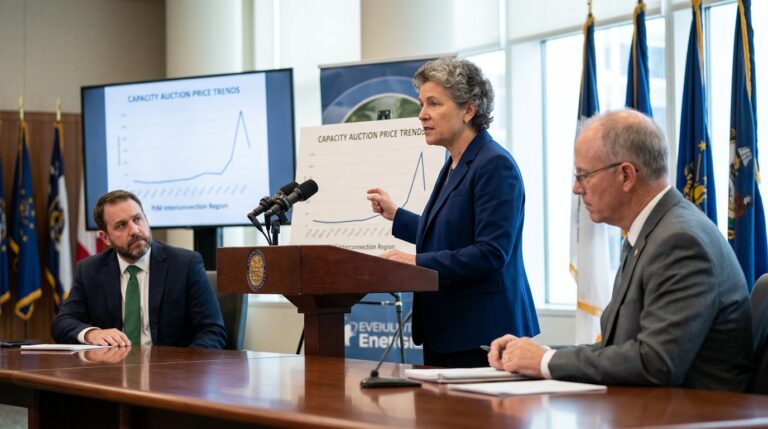
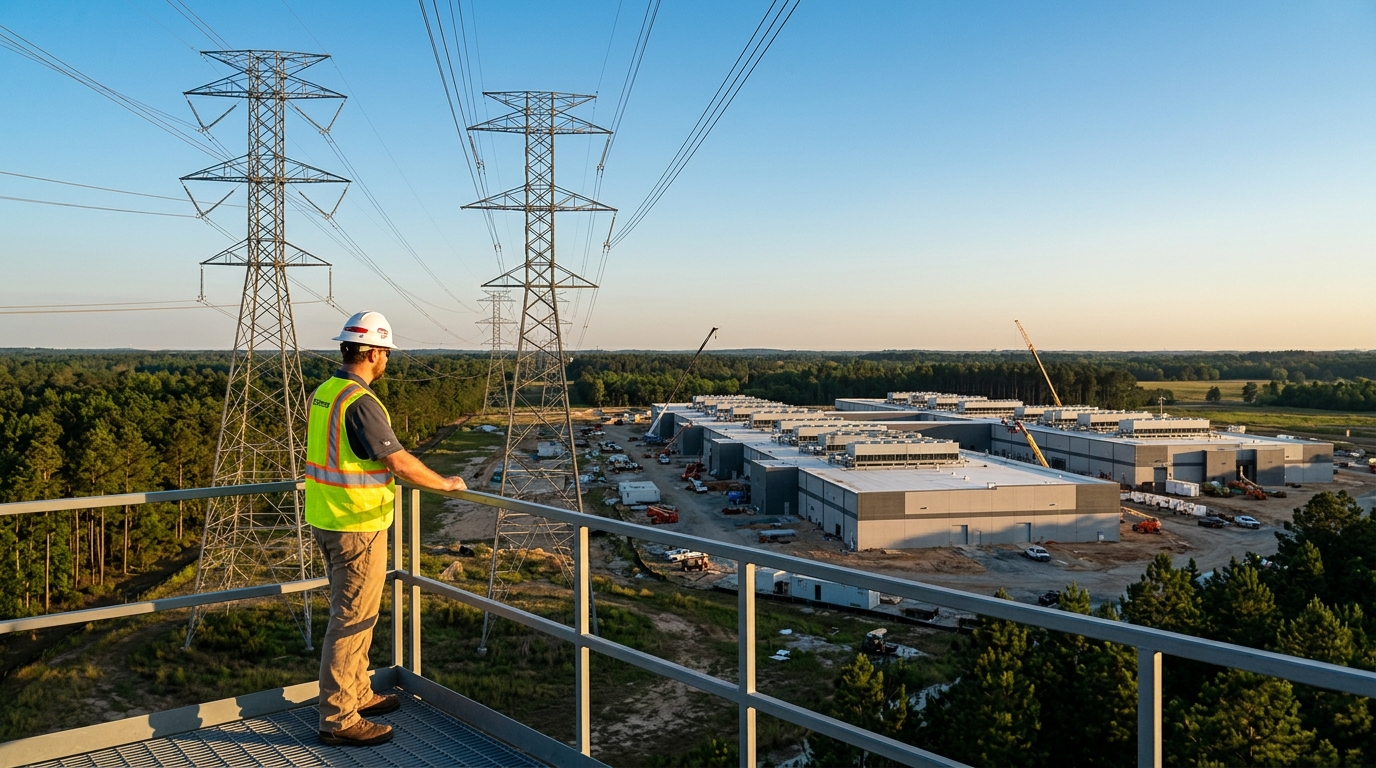
Georgia Public Service Commission (PSC) staff approved a contract between Georgia Power and OpenAI that clears the utility to provide electricity for a 3.2-gigawatt hyperscale data center planned for Effingham County. That is not a letter of intent or an MOU. It is a signed, reviewed agreement that now sits inside Georgia Power’s load ledger, and it lands at a moment when the competitive picture for utilities chasing AI infrastructure has shifted sharply in Southern’s favor.
Why the Timing Is Unusual
On August 3, 2026, Texas Governor Greg Abbott directed the Public Utility Commission of Texas and ERCOT to conduct a comprehensive verification and audit of all data centers advancing through ERCOT’s interconnection process before any additional data centers may move forward. The pause puts about 20% of the total U.S. data center pipeline at risk of delay, according to BloombergNEF.
Georgia, by contrast, just cleared one of the largest single load contracts yet approved in the country, and did it through a structured regulatory process rather than a political shock.
That contrast matters for hyperscalers deciding where to commit capital over the next decade. Georgia’s process, for all its friction, produced a definitive answer in weeks. Texas is running an audit with no confirmed end date.
The Rate-Base Case for Southern
Under the agreement, OpenAI will pay the full cost of the infrastructure needed to serve it and has committed up to 1,000 MW of flexible demand response, which enables Georgia Power to reduce energy delivered to the facility during periods of high demand. That demand-response commitment is significant: it reduces the new generation capacity Georgia Power must build to backstop a single tenant, making the investment math cleaner.
Georgia Power said revenues from OpenAI and other large-load customers already announced, together with projected additional growth, are expected to generate approximately $950 million in annual savings for customers beginning in 2029, with total customer benefits of $2.847 billion projected over the 2029-2031 period. For Southern’s investor presentation, that number does dual work: it defends rate-base growth politically while also justifying the capital program behind it.
Southern Company has said it now has over 17 gigawatts of large-load demand under contract through the mid-2030s, and the OpenAI campus phases in between roughly 2028 and 2032, extending that contracted runway.
The Stranded-Asset Question
The protections written into this contract are the part investors need to study most carefully. As part of the deal, Georgia Power and regulators have emphasized that existing customers should be protected from covering costs if large-load projections do not materialize, including through upfront cost coverage and financial assurances from large-load customers. If a large data center customer cancels its service, Georgia Power agreed to notify the PSC within 15 days.
Those provisions reduce political risk considerably. They also contain the stranded-asset exposure that has made investor-owned utilities nervous about committing generation and transmission dollars to single customers. Consumer advocates have warned against shifting to other ratepayers the costs of providing energy to massive data centers, especially if an AI bubble emerges. The contract structure is intended to answer that concern directly, though enforcement will ultimately require elected commissioners to act, and two of the five PSC seats are to be decided in the November 3, 2026 general election.
Bull and Bear
The bull case is straightforward: Southern’s outlook is underpinned by strong retail and commercial sales growth, accelerating data-center load, newly contracted large loads, approved generation, and a rate-stability posture in key states that the company has highlighted in recent filings and investor materials. Southern Company projects 8% to 9% adjusted EPS growth through 2028 and 7% to 8% long-term growth thereafter. A contracted 3.2 GW anchor tenant is the kind of load that justifies a decade of generation and transmission investment without a rate-case fight.
The bear case is valuation and execution. Investors are paying a premium for dependable growth, leaving less room for construction setbacks, regulatory delays, or higher financing costs. And while the protections push early-exit risk back to the customer through cost coverage and financial assurances, they do not eliminate the scenario where the campus ramps more slowly than contracted, compressing near-term revenue against already-approved capital spending.
What to Watch
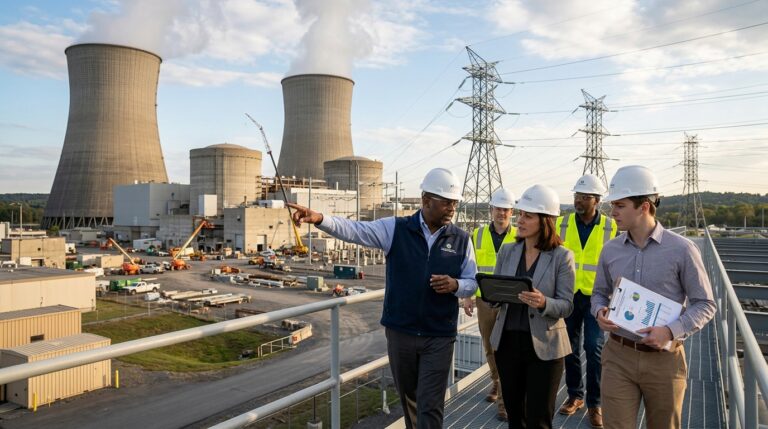
The next signal will be whether Southern’s generation filings match the OpenAI load schedule. Southern has told investors that expanding large-load activity is materially increasing its load outlook, resulting in regulatory approvals and filings for up to 10 GW of new generation and roughly $13 billion of incremental capital investment. Watch how much of that capital gets allocated specifically to the Effingham County corridor, and whether Southern pursues company-owned generation or relies on third-party supply agreements to serve it. The answer will determine how much of the OpenAI revenue actually accrues to Southern’s rate base rather than passing through to independent power producers.
A public summary of the OpenAI contract is expected in early September. That disclosure, alongside Southern’s third-quarter earnings in late October, will give investors the clearest picture yet of how 3.2 gigawatts translates into allowed returns.