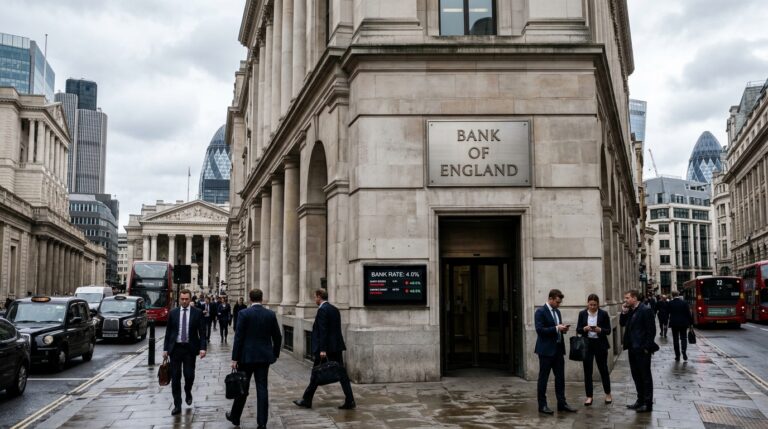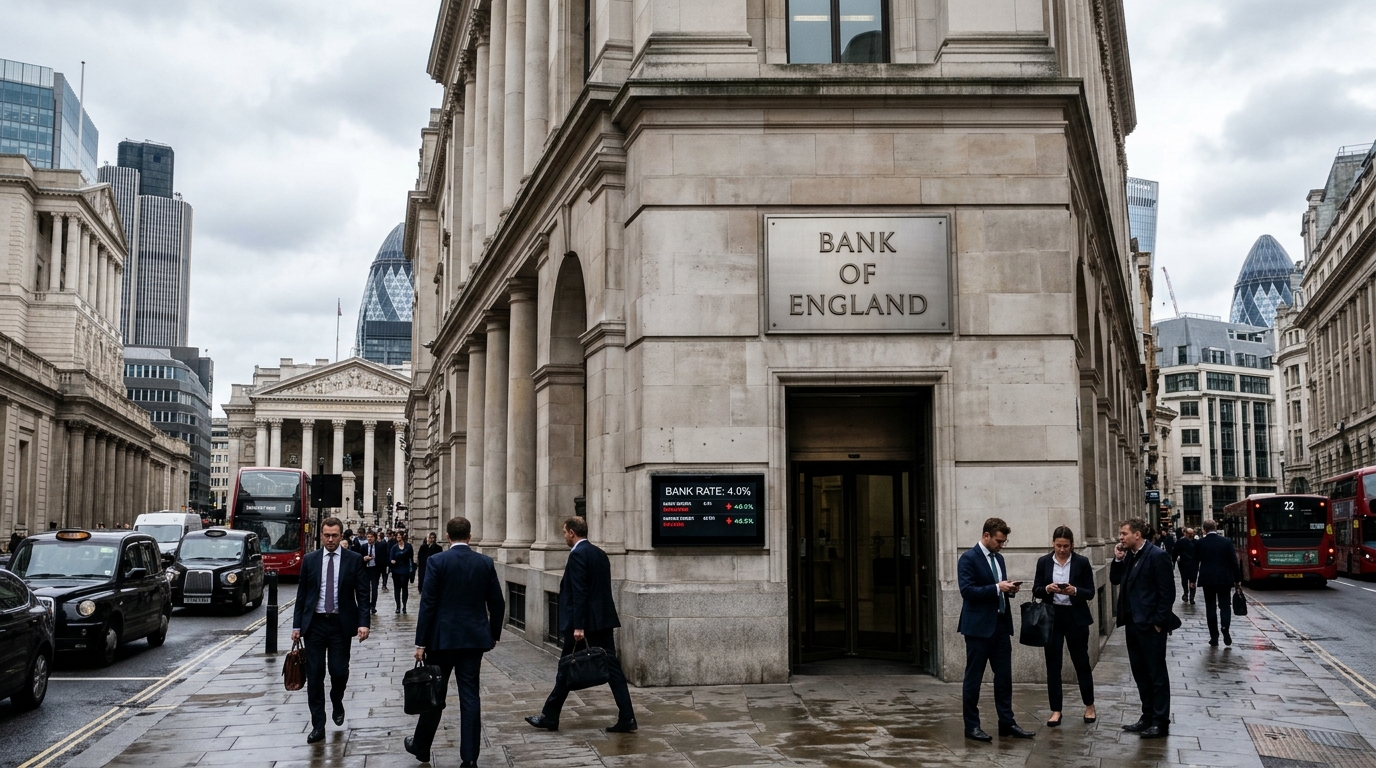
The Bank of England’s first rate increase since August 2023 arrives at noon GMT today, and it carries almost no surprise. Market pricing and economist previews going into Thursday had pointed strongly to a 25 basis point move, taking Bank Rate from 3.75% to 4%. When forecasters cluster that tightly and the derivatives market is as close to certain as it ever gets, the rate itself is not news. The numbers that move sterling, gilts, and the FTSE 100 today are the ones printed beside individual committee members’ names.
Preview polls and bank notes sketched out a range of likely vote splits. At the previous meeting in September, the committee voted 6-3 to hold at 3.75%. That precedent matters. A 6-3 result today would signal that the September dissenters who wanted to hike have only just dragged colleagues with them, leaving the committee divided about how much further to go. An 8-1 majority, by contrast, would read as a committee with genuine conviction, hardening expectations for December and beyond.
What the Pound Is Actually Telling You
Sterling has been trading near the mid-1.30s against the dollar heading into Thursday’s decision. Read that number carefully before concluding Britain’s rate outlook is driving it.
The US Dollar Index slid Wednesday after Democrats won control of both chambers of Congress, and it touched its lowest level since late September. That move matters. Sterling rising toward 1.35 against that backdrop is partly a UK story and partly a dollar story. The two are not the same thing, and conflating them leads to the wrong conclusion about the pound’s real strength.
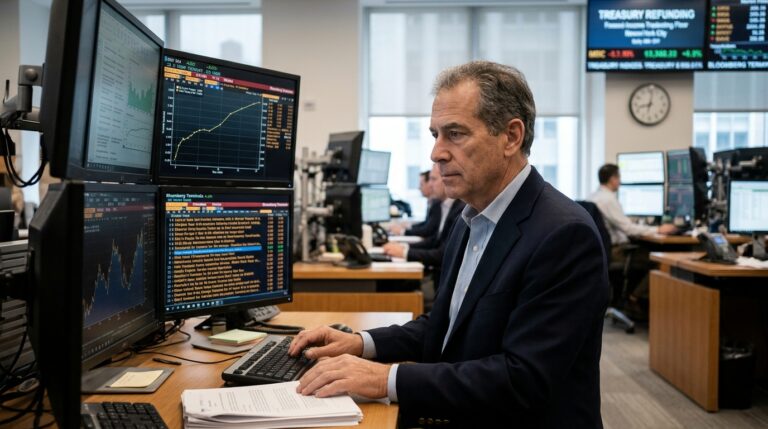
The dollar move itself has a structural dimension beyond the election result. Treasury’s quarterly refunding statement, dropping into that same post-election yield decline, adds a second variable to dollar direction.
Much of the sterling rally into this decision may already be in the price, leaving limited room for the pound to climb further without a firmer signal from the Bank. That is what the Monetary Policy Report delivers. In September, the MPC said inflation was expected to reach slightly above 4% in 2027 Q1. If today’s updated forecasts lift that path further, or push the peak later, the gilt curve adjusts and sterling follows. If the Bank trims the inflation trajectory and signals that one hike may suffice, the pound can give back ground regardless of where the DXY sits.
Where the Stress Shows Up
With markets still leaning toward further tightening, the MPC’s voting split, updated forecasts, and forward guidance could determine whether GBP/USD extends its rally or retreats from resistance. Policymakers may also signal that markets have overestimated the number of hikes to come, which would compress the front end of the gilt curve and weigh on financials-heavy FTSE 100 constituents that have benefited from rate-rise expectations.
For December specifically, attention will turn quickly to how officials describe the pace and conditions for any further tightening. Governor Andrew Bailey’s language on what comes next can carry more weight for front-end pricing than anything in the headline rate itself.
What to Watch at 12:00 GMT
Three things, in order of importance. First, the vote split: anything materially narrower than a clear majority is sterling-negative. Second, the inflation forecast path in the Monetary Policy Report, specifically whether the 2027 Q1 peak rises above the September projection. Third, any direct guidance on December. With a hike largely priced in, the decision itself is not the main event. The key question is whether the Bank signals more increases to come or hints it is prepared to pause, with a hawkish steer offering the pound support and a more cautious message leaving sterling exposed. Friday’s US nonfarm payrolls then arrive as the next major input for GBP/USD, whichever way the pound moves today.