Quantum computing has been a punchline for skeptics for years. Too early. Too speculative. Too theoretical. And for most of that time, they weren’t entirely wrong.
But something shifted this week that’s harder to dismiss.
On May 21, 2026, Rigetti Computing (NASDAQ: RGTI) signed a letter of intent with the U.S. Department of Commerce for an award of up to $100 million in funding over three years to accelerate superconducting quantum computing R&D. The funding flows directly from the CHIPS Act – the same legislative vehicle that reshaped the semiconductor industry – and it comes with a kicker: the U.S. government will take an equity stake in Rigetti as part of the deal.
That’s not a research grant. That’s a partnership.
The Bigger Context
Rigetti isn’t the only recipient. The Trump administration announced a broader $2 billion quantum initiative, with other firms including IonQ, D-Wave, Atom Computing, and PsiQuantum also receiving allocations. But the fact that Washington is spreading capital across multiple players – and taking equity positions – signals something important: the federal government has decided quantum computing is infrastructure, not science fiction.
The funding targets what Rigetti calls “key scaling bottlenecks” in superconducting quantum computing. That language matters. Scaling has been the central problem in the field for a decade. The fact that federal dollars are being specifically directed at that problem – with a commercial firm’s engineering team executing the work – is a different kind of commitment than a university lab grant.
What Rigetti Actually Builds
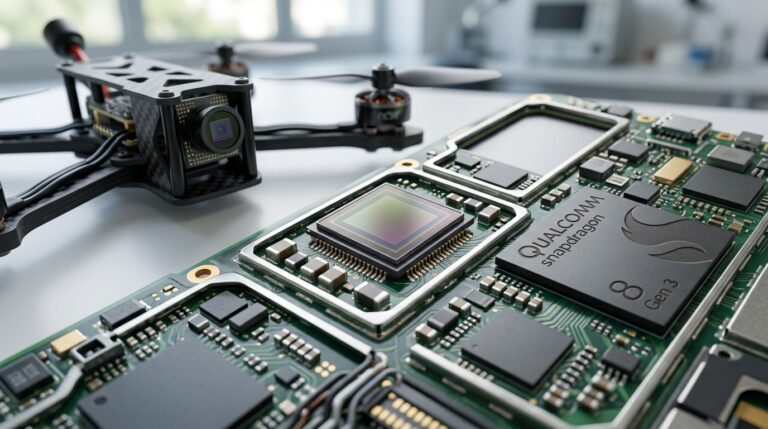
Rigetti is a full-stack quantum-classical computing company. It designs and manufactures its own chips in-house at Fab-1, the industry’s first dedicated quantum device manufacturing facility. In 2026, it deployed the industry’s largest multi-chip quantum computer – the Cepheus-1-108Q system, built on twelve 9-qubit chiplets tiled together. That system is now available on major cloud quantum platforms, giving users direct access through established commercial channels.
Wedbush called the Cepheus-108Q launch a key commercial milestone, highlighting Rigetti’s scalable chiplet-based architecture in a recent note.
Rigetti also has an $8.4 million purchase order to deliver a 108-qubit quantum computer to India’s Centre for Development of Advanced Computing (C-DAC), scheduled for the second half of 2026. International commercial traction is real, even if small.
The Numbers – and the Honest Caveat
Q1 2026 came in at $4.4 million in revenue, edging past the $4.1 million consensus, with an adjusted loss of $0.04 per share matching expectations. Rigetti ended the quarter with $569 million in cash, equivalents, and investments – and no outstanding debt. That balance sheet is the most important safety net this company has right now.
Let’s be direct about what this is not: a traditional value investment. Revenue is tiny at roughly $7 million annually. Margins are deeply negative. The stock trades at price-to-sales ratios that would make a conventional analyst wince. This is a momentum and optionality play, plain and simple. Traders are paying for potential, not present cash flow.
Seven analysts currently cover RGTI, with a median price target around $31. Rosenblatt and Wedbush both carry $40 targets. The stock has been volatile – running above $21, pulling back into the mid-$16s, and bouncing sharply on the DOC announcement. That kind of tape behavior is what you sign up for with a name like this.
The Real Question
The risk here is obvious. Deep losses, speculative valuation, long timelines to commercial scale. None of that has changed. But the DOC deal introduces something the quantum space has rarely had: durable institutional backing with a financial interest in the outcome. The government isn’t handing out charity – it’s taking equity. That alignment is new.
For investors who’ve been watching quantum computing from a distance, waiting for a signal that this technology is moving from lab to ledger – this week’s announcement may be the closest thing to one yet. Worth a closer look at the full picture before the next move.