The question institutional investors are sitting with this morning is not whether JD Vance or Kevin Warsh is right about inflation. It is whether an open, public fight between a sitting Vice President and the Fed chair this administration installed is itself enough to push the 30-year Treasury yield higher, permanently widening the spread that underlies every mortgage in America.
On Thursday, September 3, Vance stated at a White House press briefing that the administration believes the Fed should lower interest rates, calling it a proper and responsible response to recent inflation data. He framed the demand in housing terms: “The president cares a lot about interest rates, partly because he wants Americans to be able to afford homes, and the higher the interest rates, the higher the cost of borrowing.” That argument lands against a rate environment that is moving the opposite direction. The 30-year fixed-rate mortgage averaged 6.71% as of September 3, 2026, up from 6.66% the previous week. A year ago, the same loan averaged 6.50%. The 15-year fixed averaged 6.04%, up from 5.98% the week prior.
What makes Vance’s remarks structurally different from routine White House pressure on the Fed is who he is pressuring. Warsh was sworn in as Fed chair in late May 2026 at the administration’s own request. At Jackson Hole on August 28, Warsh gave a more hawkish reading of inflation than he had after the July FOMC meeting. He recommitted to the Fed’s 2% PCE inflation target and said elevated prices should be the central bank’s main focus. Markets read it clearly: fed funds futures traders boosted the implied odds of a quarter-point hike at the September meeting after the speech, according to the CME’s FedWatch tool.
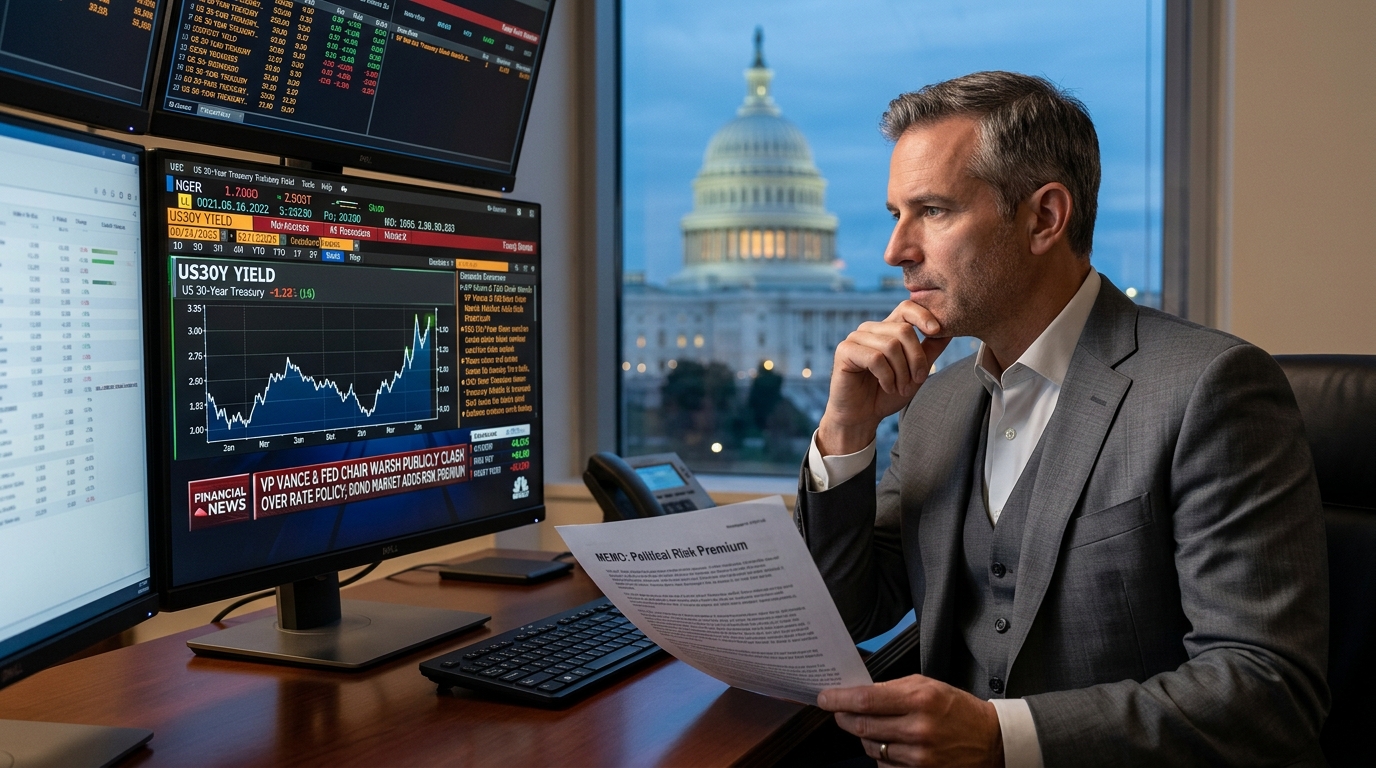
The administration is now arguing against the direction of its own appointee, in public, thirteen days before the September 15-16 FOMC meeting. That is the risk that bond investors are pricing. The 30-year Treasury yield was about 5.25% this week. Gavekal Research noted that Warsh’s stance appears to put the Fed at odds with the U.S. Treasury, which in mid-August announced increased sizes of long-end liquidity support buybacks in an apparent attempt to prevent yields rising further at the long end. That is two arms of government pushing against each other on the same curve.
The Bull and Bear Cases for the Long Bond
The bull case for TLT, the iShares 20+ Year Treasury Bond ETF, rests on Fed Governor Christopher Waller, who delivered a counter-signal Thursday. Waller said he is inclined to support keeping interest rates unchanged at the September meeting, a stance that immediately moved markets and drew contrast with Warsh’s tone at Jackson Hole. Investors had raised the odds of a September hike to nearly 65% by Wednesday. After Waller’s comments, CME FedWatch implied odds moved back toward a coin flip. Waller’s remarks suggest that a rate hike later this month is not a done deal, and stock prices rose while bond yields fell in response.
The bear case is simpler and harder to dismiss. TLT has experienced significant volatility as yields have climbed. With an effective duration around the mid-teens, even modest increases in the 20-year or 30-year Treasury yield can erase months of income almost immediately through price declines. Despite offering a distribution yield in the high-4% range, TLT is down about 6% year to date in 2026 and has been trading near its lowest levels since the mid-2000s. That is what White House-Fed friction looks like in a portfolio.
What Investors Are Missing
The overlooked consequence of this standoff is not the September decision. The more consequential release is the August CPI report, scheduled for Friday, September 11, one week before the FOMC decision. Waller has been explicit that the inflation data between now and the meeting will be decisive for his vote: continued disinflation supports a hold, while a hot number could flip him toward a hike. If CPI comes in warm, the White House-versus-Warsh tension escalates immediately. A Fed that hikes over the explicit public objection of both the President and Vice President would be a historic institutional confrontation, and bond markets would price that risk in the long end before the meeting even opens.
Stocks to Watch
- TLT: The most direct expression of the debate. Every basis point the 30-year yield adds is a price loss for TLT holders. The fund is already down about 6% in 2026 near its lowest levels since the mid-2000s; a September hike would test that floor again.
- ITB: The iShares U.S. Home Construction ETF is still down about 4% year to date and sitting roughly 7% below where it traded a month ago. With mortgage rates at 6.71%, builder incentives are eating margins. A hike extends that pressure.
- XHB: The SPDR S&P Homebuilders ETF has lost 7.9% year to date. Its broader mix of building products retailers gives it slightly more insulation than ITB, but the rate sensitivity is real either way. It is not a hedge; it is a different point on the same curve.
The September 11 CPI report is now the single most important data point for all three. If the number surprises to the upside, the White House will push harder, Warsh will likely hike anyway, and the long bond will tell you exactly what it thinks of political pressure applied to a central bank.