ASML fell about 3.6% to roughly $1,496 in Thursday’s regular session as chipmakers extended their selloff on fears that a Democratic-controlled Congress, which won both chambers in the November 3 midterms, could tighten AI rules and slow data center construction. The selling is real. The logic connecting it to ASML’s fundamentals is not.
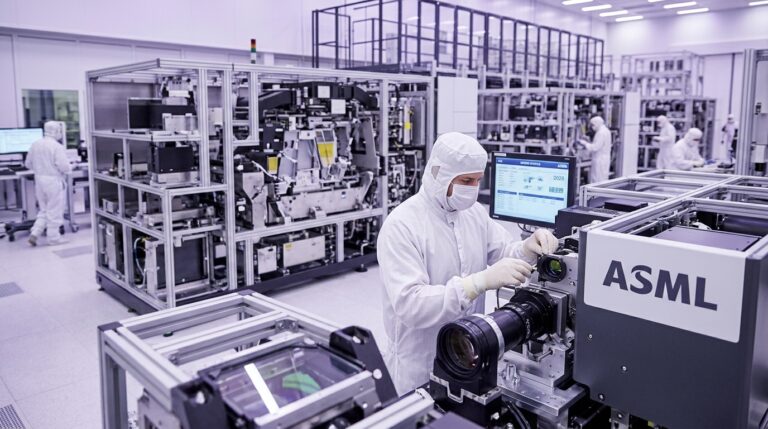
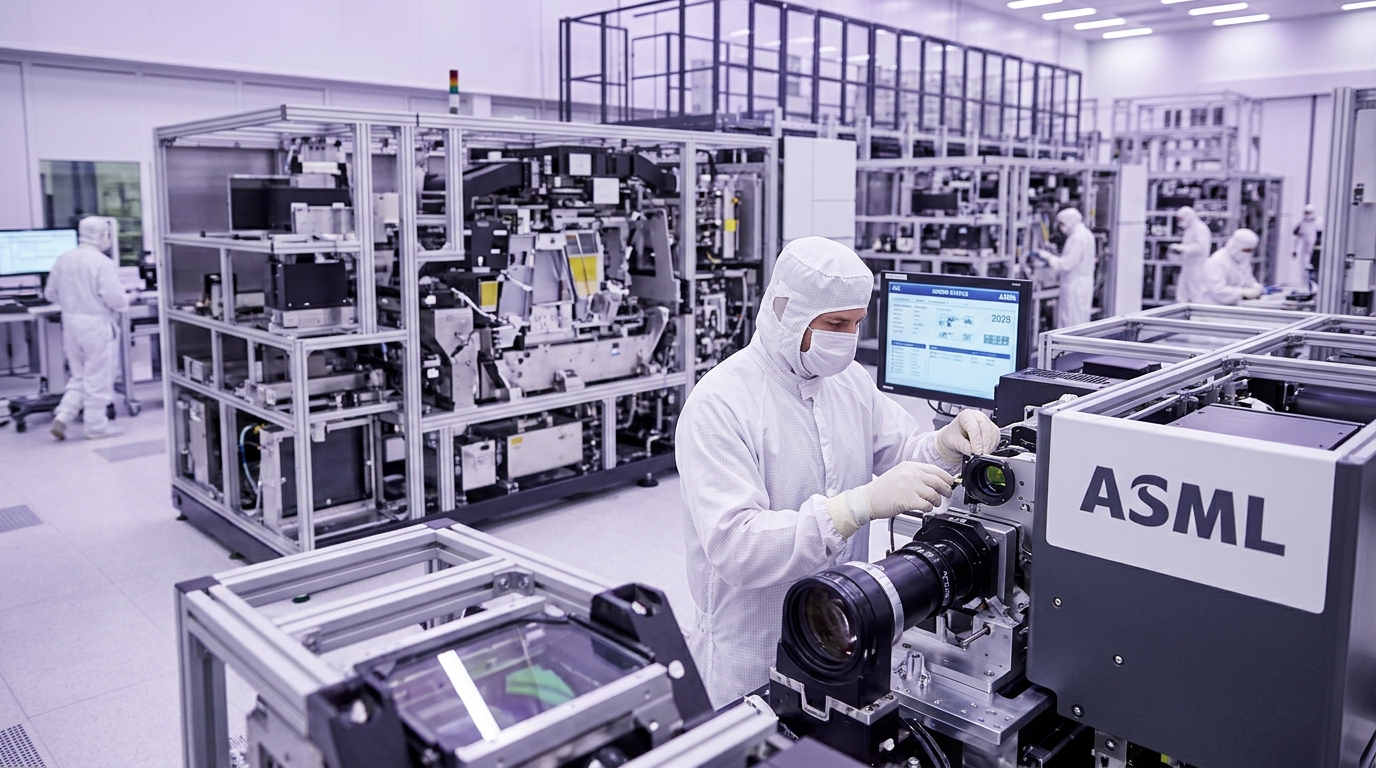
Here is what the market is ignoring: ASML, the sole EUV lithography supplier, cannot meet customer demand through 2028, even as it investigates capacity increases of roughly 30% for both 2027 and 2028. CEO Christophe Fouquet has said the company’s supply as currently planned for both 2027 and 2028 will not fully meet the demand of its customers. Those customers have no alternative. A customer that cannot get an EUV machine has no second supplier to turn to.
The election-driven selloff treats ASML as a discretionary AI-spending bet. It is not. The Dutch company holds a monopoly on extreme ultraviolet lithography technology, and without its machines, foundries cannot manufacture the advanced chips used in smartphones, computers, and AI infrastructure. Independent analyses and public filings consistently describe ASML as the sole supplier of EUV lithography. No data center regulation passed in Texas or Georgia changes that arithmetic.
The valuation compression is where the real argument lives. ASML’s forward price-to-earnings ratio has fallen to roughly 24. That is the kind of multiple you assign to an industrial with pricing risk and competitive pressure. ASML has neither. The EUV monopoly converts the supply crunch into pricing power, with management describing greater flexibility to align pricing with customer value than it has historically had.
The next product cycle makes today’s multiple look even more compressed. Samsung has said it expects to use High-NA EUV in the second half of this decade, while TSMC has pointed to the end of the decade. ASML’s High-NA EUV machines have been widely reported to cost roughly €350 million each, with installed costs often cited as higher. That is roughly twice the price of standard EUV tools the market has priced for years. If High-NA adoption accelerates, ASML’s average selling price per machine rises meaningfully, and gross margins can still credibly track toward the mid-to-high 50s target management has set for 2030.
The backlog signals confirm this is structural. On its recent earnings call, management described strong interest to place orders for 2029 and even 2030, and said negotiations to implement higher value-based pricing on its most critical products are complete, with the impact starting in 2027 and the full effect expected from 2028. In Q3, ASML reported €11.7 billion in total net sales, with gross margin at 57.5%.
The honest risk is not political. The selling puts sharper focus on whether chipmakers’ expansion plans can keep supporting demand for ASML’s equipment. A genuine collapse in hyperscaler AI spending would eventually show up in order cancellations. But Fouquet has publicly argued that China’s progress toward rival EUV tools remains very limited, which removes the competitive threat that would otherwise accelerate any demand softening.
What today’s move offers is a roughly 24x forward multiple on a business whose order book is effectively oversold through 2028 and whose next product costs roughly twice as much as the current one. The election created the discount. The monopoly sets the floor.