Energy stocks have been sliding for weeks on oversupply fears and falling crude. That changed this morning.
Why This Stock Now
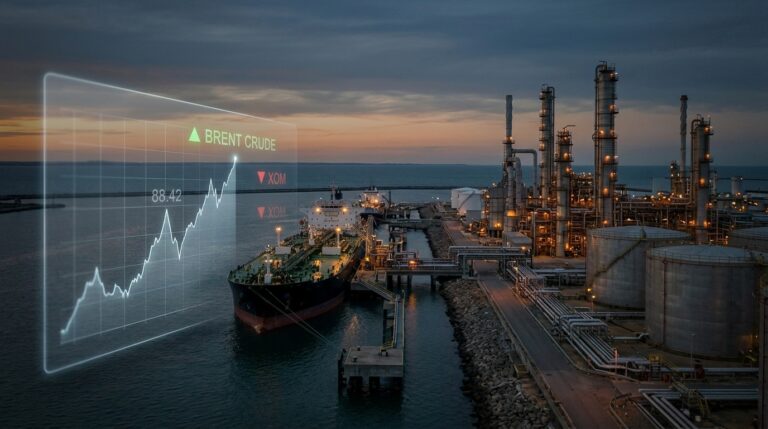
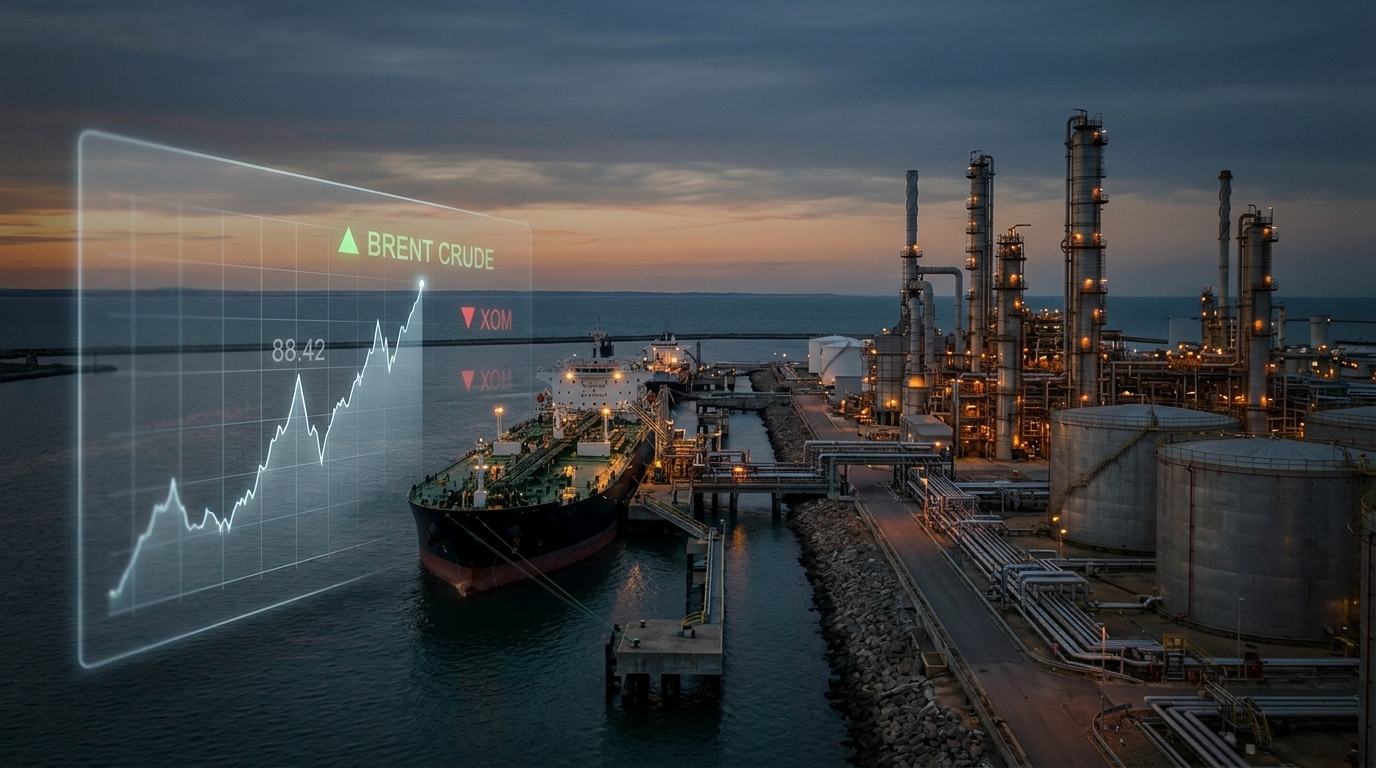
Yemen’s Iran-aligned Houthis said on Wednesday they had attacked Saudi Arabia’s Ras Tanura oil refinery, the kingdom’s largest, which is near a major export terminal for Saudi crude. The Houthi military spokesman said the attack caused fires. Saudi officials said air defenses intercepted and destroyed drones in Ras Tanura, and Aramco did not immediately respond to requests for comment. Markets still leaned back toward supply risk, with Brent crude back above $88 a barrel in early trading.
Ras Tanura, which has a refining capacity of 550,000 barrels per day, has previously been targeted during the conflict with the Houthis as well as during the broader U.S.-Iran war. This is not a minor incident. That is roughly half a percent of daily global oil consumption at one facility.
The Business
ExxonMobil is the most straightforward way to own the geopolitical risk premium in crude without taking on the volatility of a pure-play producer. It is integrated: it produces, refines, and distributes, so each part of the business responds slightly differently to oil price swings.
ExxonMobil’s third-quarter 2026 adjusted earnings were $17.5 billion, or $4.23 per share. Cash flow from operating activities was $25.7 billion and free cash flow was $19.1 billion. Those are not oil-price-spike-dependent numbers. They reflect a structurally stronger business than the one that existed before the company’s decade of cost reduction.
Why Wall Street Is Paying Attention
Exxon Mobil and Chevron have both sold off sharply alongside crude in recent weeks. The selloff preceded today’s headlines. Now the supply fear is back and the stocks are cheaper.
At current oil prices in the high $80s, the business remains highly profitable. At Brent above $90, it generates exceptional cash.
What’s Driving the Opportunity
The dividend math is the most underappreciated element. Exxon only needs about $59 oil to fully cover its dividend. With Brent trading at $88, that buffer is 49%. Even in a scenario where crude retreats sharply from here, the payout is durable.
Exxon declared a quarterly dividend of $1.07, up from $1.03, payable December 10, 2026. That is the kind of compounding raise that attracts institutional income mandates. Meanwhile, ExxonMobil allocated $9.4 billion to shareholder returns in the third quarter through dividend payments and share buybacks.
The stock has a 52-week high of $188.50. Shares recently traded around $159.77. That is about a 15% discount from the peak in a business generating record free cash flow.
What Could Go Wrong
The oversupply argument is real, and it was pushing oil lower before this morning’s headlines. If that pressure persists, it can cap crude and keep energy equities under pressure even if geopolitical risk remains elevated.
Attacks on Saudi infrastructure have historically produced a brief spike followed by resumption of the downtrend if production recovers quickly. Ras Tanura has been targeted before and operations have resumed. If that pattern holds, today’s crude bounce fades and the supply thesis reasserts itself.
The Bottom Line
ExxonMobil does not need a sustained geopolitical shock to justify today’s price. It needs oil above $59, a business that keeps generating $19 billion in quarterly free cash flow, and time. Today’s Ras Tanura headlines add an immediate catalyst on top of an already discounted, high-quality energy franchise. That combination of durable fundamentals, a pullback that overshot the fundamentals, and a fresh supply risk makes XOM the most compelling single stock in energy right now.