Editor’s Note: BLACK FRIDAY SPECIAL – For a Limited Time Only!
In 2018, when popular media outlets like the MIT Technology Review were calling AI “overhyped,” former VC insider Luke Lango went against the grain and claimed that “AI is the future” and “Nvidia is the cream of the crop.” Now, Lango is stepping forward with a new prediction, and it once again flies in the face of everything the mainstream media is telling you. And in celebration of Black Friday, we’re giving readers a special opportunity to access Luke’s investment research at an exclusive Black Friday price. See below for the full story and how to take advantage of this limited-time offer…
Dear Reader,
Is Elon Musk about to make the biggest announcement of his career?
Rumors of a Tesla-SpaceX merger are heating up…
- Tesla Weighs Sale of China Business to Pave Way for Potential SpaceX Merger – Wall Street Journal
- Tesla and SpaceX Are Secretly Merging – Not on Paper, But in AI Power – Barron’s
- Musk Keeps Tesla-SpaceX Merger Speculation Alive, Cites Growing Overlap – Reuters
- Musk’s Next Move May Be a Megamerger of SpaceX and Tesla – New York Times
But the mainstream media is missing the bigger picture. The implications of this historic convergence are vast.
Bestselling author and longtime Elon Musk confidant Peter Diamandis predicts it will create…
“A world in which everyone can have access to all the food, water, energy, healthcare, and education that they need and desire.”
Furthermore – according to my estimates – it could create $126 trillion in wealth, dwarfing the impact of AI, robotics, clean energy, and driverless cars COMBINED.
Elon himself has said this opportunity is so massive, it could multiply your starting investment 1,000 times over.
But here’s the surprising part…
If you want to take full advantage of Elon’s audacious plan, you don’t want to buy Tesla or SpaceX.
Forget stocks, bonds, crypto, and options. One overlooked asset captures Elon’s entire plan – name and ticker revealed here.
And thanks to our special Black Friday Sale, you can now access my investment research at a special discounted price for a limited time.
Click here to learn more and claim your Black Friday savings.
Regards,
Luke Lango
Senior Investment Analyst, InvestorPlace
P.S. You’ll want to move fast on this one. During Tesla’s most recent earnings call, Elon hinted at an imminent Tesla-SpaceX merger, prompting Tesla investor Gene Munster to say, “I would put the odds that these two will combine at 90% today.” With our Black Friday Sale underway, now is an opportunity to discover the details behind this prediction at a special discounted price. Get the full story and claim your Black Friday savings before this special offer expires..
Tokyo Inflation at a 16-Month High. Nikkei Rose 2%. Yen Flat.
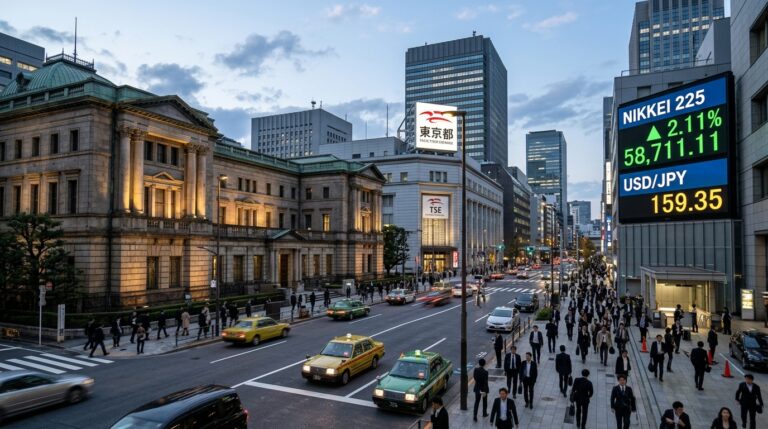
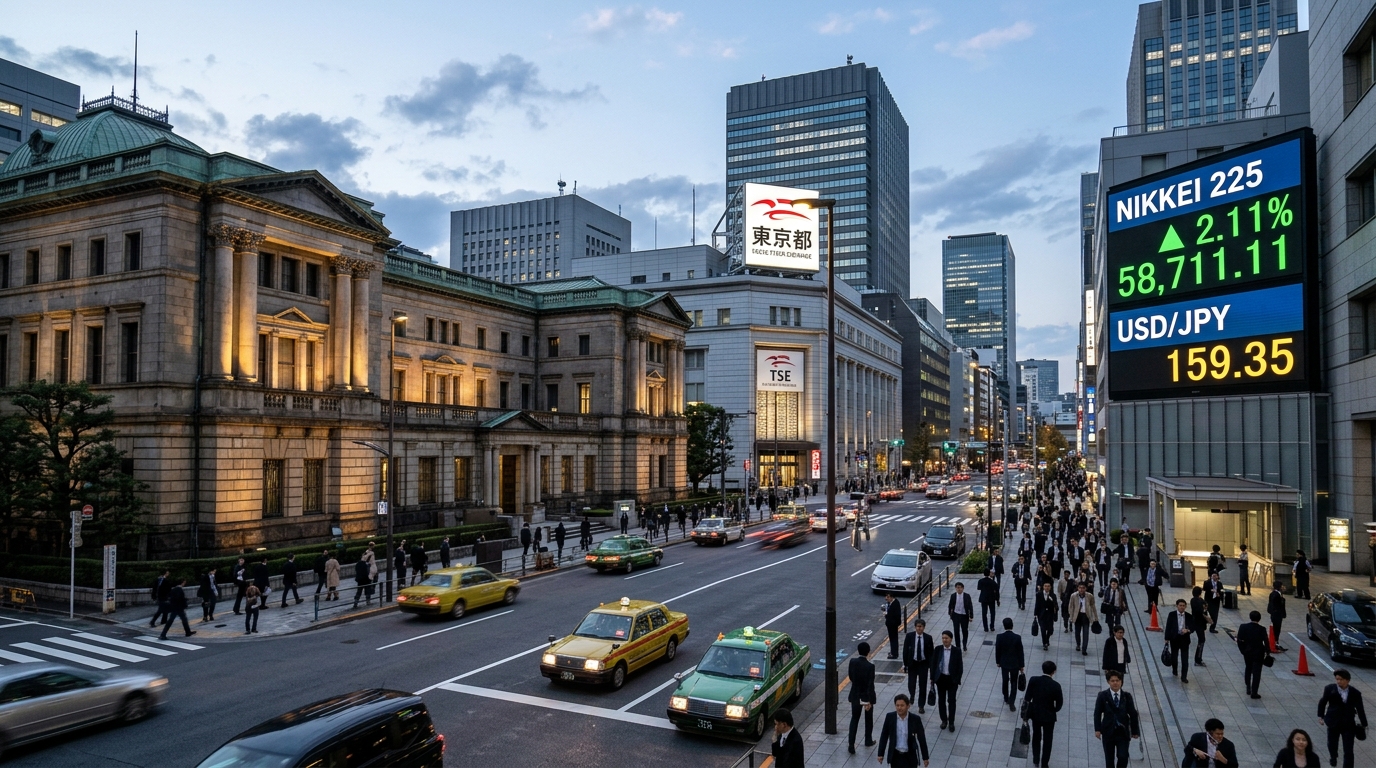
Tokyo’s core consumer price index hit 2.9% year-on-year in November, its fastest pace since July 2025, and the market’s response was almost complete silence. USD/JPY traded with mild gains around 159.35 through the Asian session. The 10-year JGB yield rose just one basis point, to 2.64%. The Nikkei 225 rose 2.11% to 58,711.11. That last number is the most revealing of the three.
When a hot inflation reading lifts equities rather than the currency it theoretically supports, the market is not broken. It has already made up its mind.
What the Data Actually Said
Tokyo core CPI rose 2.9% year-on-year in November, the fastest pace since July 2025, up from 2.6% in October, and core inflation has now stayed above the Bank of Japan’s 2% target for three straight months. The headline figure looked firm. But the index excluding fresh food and fuel, the gauge the BoJ watches most closely as a measure of demand-driven prices, slipped to 2.5% from 2.6% in October. Energy costs, inflated partly by the expiry of government utility subsidies, did the heavy lifting. Strip them out and trend inflation is actually cooling at the margin.
That internal softness explains why Tokyo core CPI came in at 2.9%, below the 3.0% expectation. The measure excluding fresh food and energy was 2.5% versus 2.6% in October, which softened the case for near-term tightening and kept the yen largely unchanged.
Why the Yen Did Not Move
The short answer: the hike is already in the price. Derivatives pricing on November 27 implied roughly a three-in-four chance of a 25 basis point BoJ hike at the December 17-18 meeting, which would take the policy rate from 1.25% to 1.50%. With odds already that high, delivering the hike would not automatically earn the yen much.
There is a ceiling working against yen strength even if conviction grows. Analysts at MUFG have warned that intervention risk rises if USD/JPY pushes beyond 160.00. The pair traded in a narrow band just above 159.00 through the Asian session. Intervention risk caps USD/JPY; priced-in policy caps the yen’s payoff. The result is a currency going nowhere.
What the Market May Be Missing
Markets did not treat the inflation report as fresh fuel for December. If conviction in a December hike were truly rising on the day’s data, you would expect hike odds to tick up after the release. They did not. The market is not adding to its bet. It is sitting with what it already owns.
That matters because one economist noted the BoJ could hold off if instability linked to AI and the chip sector persists, though a December hike remains the baseline. The Nikkei’s 2.11% gain was driven not by rate-sensitive sectors but by beaten-down semiconductor names rebounding. Investors moved back into AI-linked stocks after a recent selloff, even as they weighed the risk of slower investment flows and rising debt financing concerns in the sector. The rally was a recovery trade, not an inflation trade.
Where It Shows Up
Gains in real estate, banking, and textile sectors also drove the broader rally. Rate-sensitive domestic sectors rising alongside beaten-down tech is the classic profile of a market buying a soft landing, not one bracing for aggressive tightening. Banks benefit from wider margins as the BoJ raises; real estate is more vulnerable, and its advance suggests investors see the December hike as a one-and-done rather than the start of an accelerated cycle.
The dynamic playing out in Japanese bank stocks has a parallel in Europe. European lenders have already shown how a rate-hiking cycle compresses valuation discounts and rewrites earnings models for the sector.
Most economists polled by Reuters expect the BoJ to raise its policy rate by 25 basis points to 1.5% at its December meeting. A terminal rate that low keeps long JGB yields anchored and limits yen upside beyond the near term.
The ceiling on how far the BoJ can go is not just about inflation. Fiscal pressure from record budget requests has pushed JGB yields to multi-decade highs, complicating any path toward an accelerated tightening cycle.
What to Watch Next
The critical test arrives before the BoJ even meets. The Statistics Bureau of Japan’s schedule shows nationwide November CPI is due on December 18, the final day of the BoJ’s two-day policy meeting. If that reading shows the same energy-driven distortion seen in Tokyo today, elevated core and softening core-core, the BoJ will face a harder communication task than the market currently expects. A hike accompanied by dovish guidance would likely press USD/JPY lower, briefly. A hold on a 2.9% core reading would be a different conversation entirely. Keep the 160.00 USD/JPY level and the nationwide CPI release on the same watchlist.