There’s a version of MercadoLibre’s 2026 story that looks terrible. Stock down roughly 37% from its June 2025 high of $2,614. Trading near $1,631 as of mid-June. EPS missed in Q1. Margins compressed. Analysts cutting price targets.
Then there’s the other version.
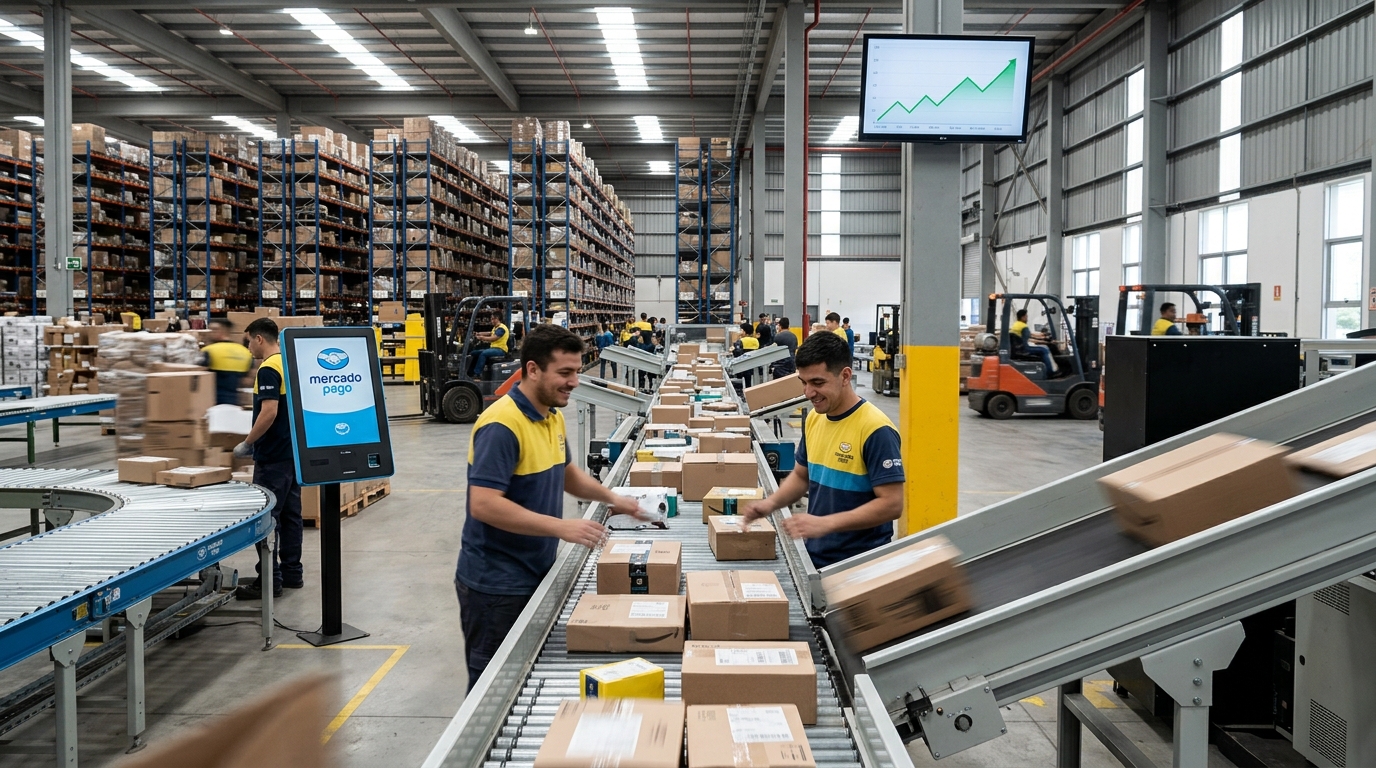
Revenue grew 49% year-over-year to $8.85 billion in Q1 2026 — the fastest pace in almost four years. Gross merchandise volume hit $19 billion, up 42% year-over-year. Total payment volume reached $87.2 billion, up 50%. The company sold 722 million items in a single quarter. Brazil saw items sold surge 56% year-on-year. The fintech arm, Mercado Pago, saw assets under management grow 77%.
That’s not a company in decline. That’s a company choosing to invest so aggressively that the near-term income statement takes the hit while the long-term flywheel keeps spinning faster.
The Margin Compression Story — and Why It’s Intentional
The EPS miss that sent the stock down 13% post-earnings was real. Q1 EPS came in at $8.23 against a forecast of $9.37. Operating income fell 20% year-on-year as the company plowed capital into free shipping, a Mercado Pago credit card, first-party product selection, cross-border trade, fulfillment centers, and AI infrastructure.
Here’s the part Wall Street didn’t love but long-term investors might: MELI is doing this on purpose. Management has been explicit about prioritizing scale and ecosystem depth over near-term profitability. Shipping unit costs and engagement metrics are improving even as the headline numbers look messy. The company is effectively buying the next five years of market share at the cost of this year’s margins.
The Mexico announcement punctuated that point. On June 8, MercadoLibre committed $4.6 billion to Mexico for 2026 — a 35% increase from the $3.4 billion it deployed last year, which itself was a 38% jump over the prior year. The investment covers logistics, technology, and Mercado Pago expansion, along with plans to create 8,500 jobs. Mexico already accounts for roughly a quarter of group revenue. With only about 15% of retail currently happening online there, the runway is long.
An insider bought shares on June 11 at $1,604. The company’s chief accounting officer. Small transaction, but the direction matters.
The Bull/Base/Bear in Plain Terms
Bull case: margins recover in the back half of 2026 as logistics investments scale and unit economics improve. Analysts who stayed bullish — Benchmark kept a Buy at a $2,380 target even after cutting from $2,780 — are looking at the business growing 19% annually over the next three years with revenue projections of $67 billion by 2029. At the current price, the market is not pricing that scenario.
Base case: the stock grinds sideways while the company keeps investing. Revenue growth stays strong. EPS stays volatile. Investors who can tolerate that tension get a better entry than the peak. Next earnings are August 5, 2026 — that’s the next real catalyst.
Bear case: competition in Brazil intensifies, loan-loss provisions grow faster than expected, and margin compression persists longer than management guides. Latin America’s political and macro volatility adds execution risk to an already ambitious spending plan.
What’s worth watching here is the gap between the operating metrics — which are accelerating — and the share price, which is sitting near multi-year lows. That kind of divergence usually resolves one way or the other. Sometimes it takes longer than anyone expects.
For informational purposes only.