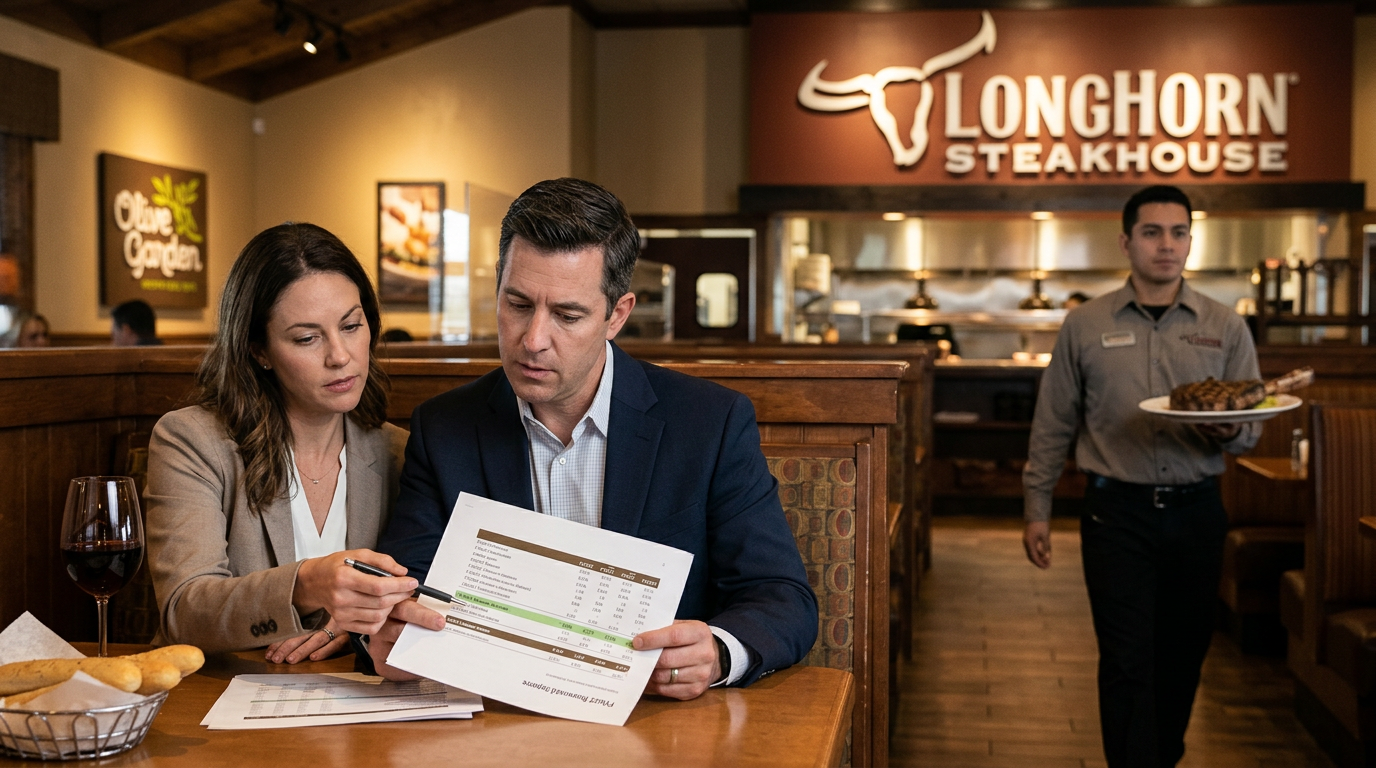
Darden Restaurants reported this morning. The headline numbers were fine – arguably good. Q4 revenue of $3.72 billion, adjusted EPS of $3.66, a beat on both lines. The board authorized a new $1.5 billion share repurchase program. The dividend went up.
The stock fell anyway.
This is not unusual for Darden. The company has a habit of delivering solid quarters and then getting punished on guidance. Today was no different. Fiscal 2027 earnings guidance came in at $11.10 to $11.35 per share – below the $11.39 consensus. Total sales guidance of $13.6 billion to $13.75 billion landed at the low end of expectations too.
Markets are selling the guide. But the more interesting read is what the underlying brand data is actually saying about where the consumer sits right now.
LongHorn Steakhouse posted same-restaurant sales growth of 9.5% in the quarter. That is not a typo. A steak chain grew comp sales nearly 10% in a quarter when everyone is supposedly watching their spending. The fine dining segment managed 1.9% growth. Respectable, given the backdrop.
Then there is Olive Garden. Same-restaurant sales up just 2.4%. Below expectations. And this matters far beyond Darden.
Olive Garden is the most important casual dining bellwether in the country. It serves middle America. It is where the consumer who is not wealthy but is not broke goes to celebrate a birthday or a promotion. When Olive Garden traffic slows, something is happening in the middle of the income distribution that the aggregate data tends to miss.
What’s interesting is the bifurcation. LongHorn – slightly higher price point, slightly more affluent customer – is on fire. Olive Garden – broader, more price-sensitive base – is grinding. That is not a restaurant execution story. That is a consumer story. The same K-shaped dynamic that is showing up in credit card delinquency data and retail earnings is now visible on a Tuesday night in a strip mall in Ohio.
The other thing worth noting: the extra week in Q4 inflated the headline numbers. Darden’s fiscal year included a 53rd week of operations, which contributed roughly $0.25 to both reported and adjusted EPS. Strip that out and the underlying growth looks considerably less impressive than the 22.8% adjusted EPS increase implies.
Now, the bull case for DRI is not complicated. The company runs a tight operation, generates durable free cash flow, and is returning capital aggressively. A $1.5 billion buyback on top of an ongoing dividend program at a mid-20s P/E is not obviously expensive. Management plans to open 75 to 80 new restaurants in fiscal 2027. Chuy’s – the acquisition they completed last year – is still being integrated and could provide a meaningful tailwind as execution improves.
The bear case is that the FY2027 guide is being framed as conservative, but the Olive Garden traffic trend is the part that does not go away easily. Traffic, not pricing, is the variable that determines whether casual dining can sustain momentum in an environment where consumers are starting to feel the weight of three years of cumulative inflation.
Management said they are pricing below inflation deliberately – protecting traffic over check average. That is the right strategic call. It is also an admission that the customer they are fighting for is under pressure.
The selloff today is probably overdone. The business is not broken. But the consumer read buried in these numbers is worth sitting with. Because Darden is not the only company with an Olive Garden problem right now – they are just the one reporting it in public.
Full breakdown here if you want to run the numbers yourself.
This editorial is for informational purposes only and does not constitute investment advice. All figures sourced from company filings, analyst reports, and publicly available data as of June 25, 2026. Past performance does not guarantee future results.