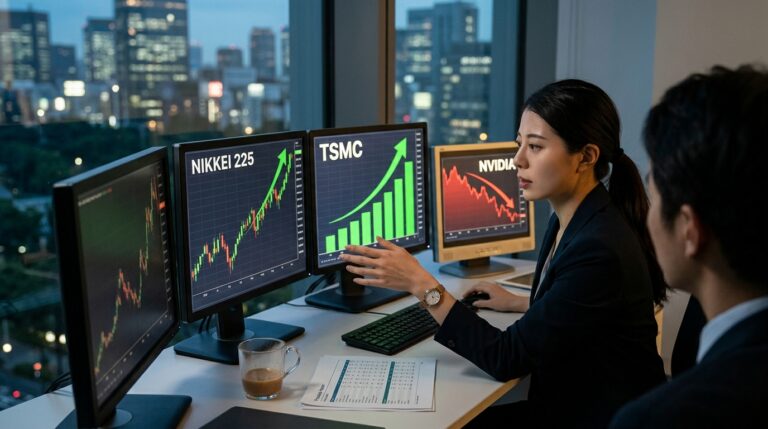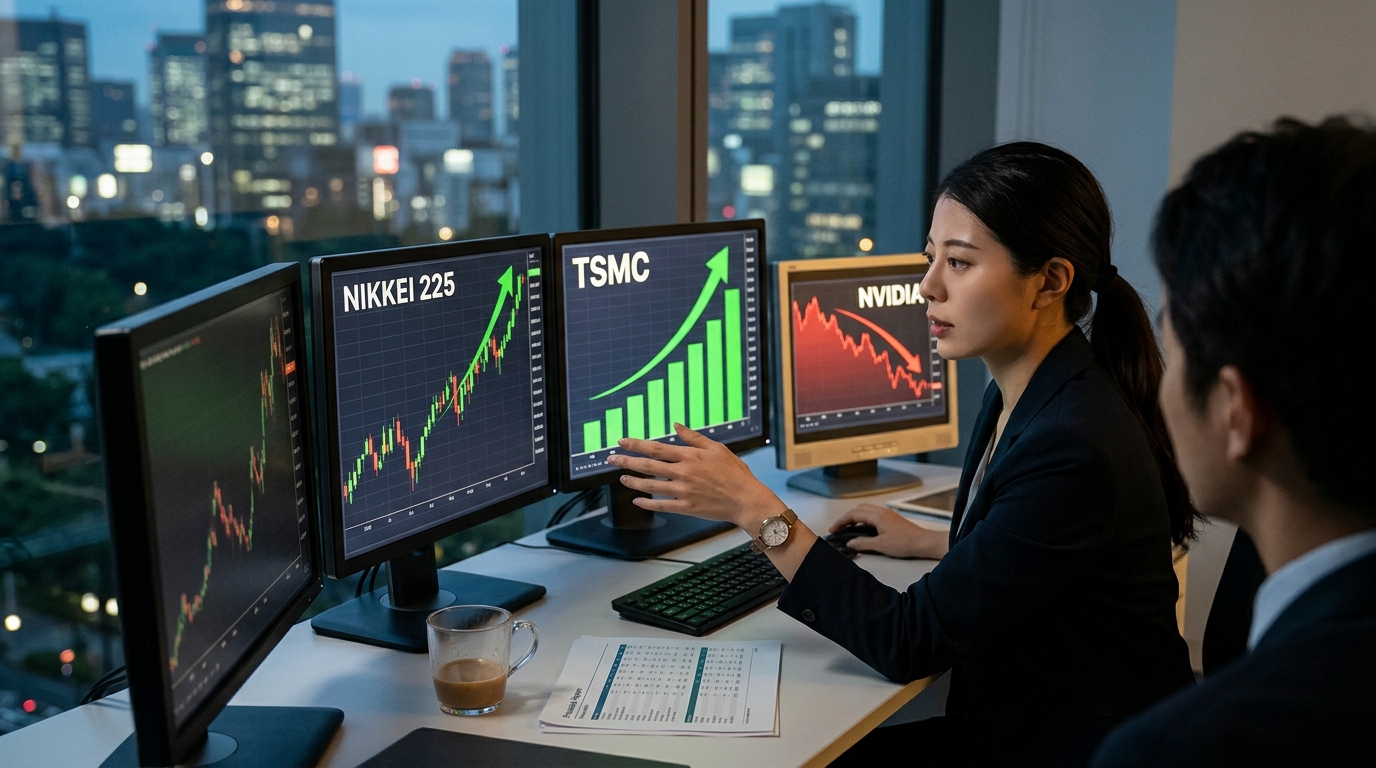
The numbers out of Asia on Monday morning were striking by any measure. Taiwan’s Taiex led regional gains, rising 4.9%, supported by a 4.7% jump in TSMC shares. In Tokyo, the Nikkei 225 rose 3.4% to 59,411.34 by midday. Chip equipment maker Tokyo Electron gained 6.5% and testing equipment maker Advantest rose 5.1%. South Korea’s Kospi added 1.5% to 5,137.22, with Samsung Electronics up 2.7% and SK Hynix up 3.9%. The AI complex, as a bloc, buying in unison, the first time that has happened since the midterm rout cracked the whole sector last week.
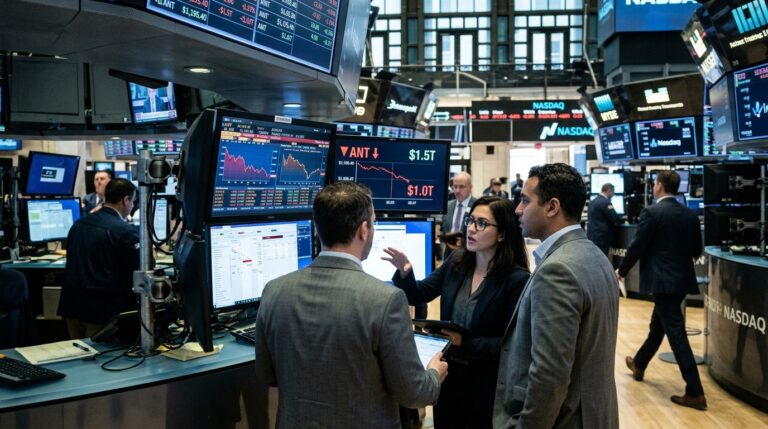
But read the full scoreboard, and the picture gets more complicated. Nvidia stock fell about 4% in premarket trading, though broader stock indexes appeared to shrug off the news as they continue to recover from last Thursday’s brutal sell-off. S&P 500 futures were up roughly 0.3%, while Nasdaq 100 futures were near flat to slightly lower in early trading. Asia bought the wreck. The US hedged it.
Why It Happened
Regional tech stocks benefited from gains on Friday in the US, where AI stocks got some relief from their sell-off earlier in the week on worries that Democratic victories in the midterm elections could slow construction of AI data centers. That Friday bid was the permission slip Asian markets needed to step in. The recovery followed a turbulent week for technology stocks, as concerns over the profitability of massive AI investments, infrastructure spending, and the prospect of tighter US regulation triggered heavy selling across chipmakers and other technology companies.
The Nvidia overlay adds texture. Nvidia’s board of directors announced Sunday that it is launching an independent investigation following reports that CEO Jensen Huang was targeted by a foreign intelligence effort. The board said it has no reason to believe national security or company secrets were compromised and expressed confidence in Huang’s leadership. Asian markets chose to take that reassurance at face value. US premarket traders did not, sending Nvidia shares lower while keeping broader index futures modestly positive. The same event, two different verdicts.
What the Market May Be Missing
The divergence between Asia’s enthusiasm and America’s hesitation is the real signal here. TSMC surged more than Nvidia’s US ADR on Friday, then extended those gains overnight. One Korea-based analyst, Ryu Young-ho of NH Investment & Securities, argued that Nvidia’s rivals, including Advanced Micro Devices, could attract greater attention in the short term, potentially putting Samsung, which has business ties with AMD, in the spotlight. That is worth sitting with. If the market is quietly repositioning around Nvidia’s CEO risk toward AMD and its Korean supply chain, Samsung’s modest gain this morning understates the potential.
There is a second issue. Taiwan’s Taiex rebounded after recording one of its steepest weekly declines in decades. Bounces after crashes of that magnitude are historically unreliable as trend signals. The buying pressure overnight was real, but so was the damage underneath it.
Risks and Counterpoints
The bull case is straightforward: semiconductor demand tied to AI infrastructure is not going away because one midterm cycle produced a Democratic Congress. Data center construction slows at the margin; it does not stop. TSMC’s customers beyond Nvidia are still building. Despite its recent gyrations, the S&P 500 is only 5.7% below its all-time high, set last month, which suggests the broader market has not revised its structural growth outlook.
The bear case is harder to dismiss. These are fairly modest moves for stocks that have swung sharply as investors dumped and then bought AI-related shares in recent weeks. The Kospi, notably, gave up its morning gain in some accounts and finished well off session highs, with foreign investors continuing to sell Korean equities. An overnight bounce driven by retail and institutional dip-buyers in Asia, while US premarket traders mark Nvidia down about 4%, is not a confirmed turn. It is a question.
What to Watch Next
The October inflation report, technology earnings, and potential AI regulatory proposals remain among the developments investors are monitoring this week. CPI on Tuesday, November 10, will set the near-term tone: a soft reading hands the Fed room to hold steady and removes one tail risk from the AI spending thesis. A hot number complicates everything. Watch whether TSMC’s US ADR opens in line with or at a discount to its Taiwan gains overnight. That spread, more than any single index close, will tell you whether the US is confirming Asia’s read or politely disagreeing with it.