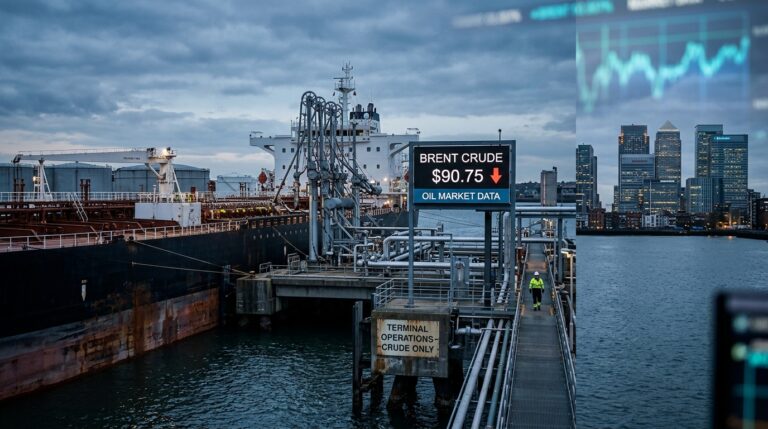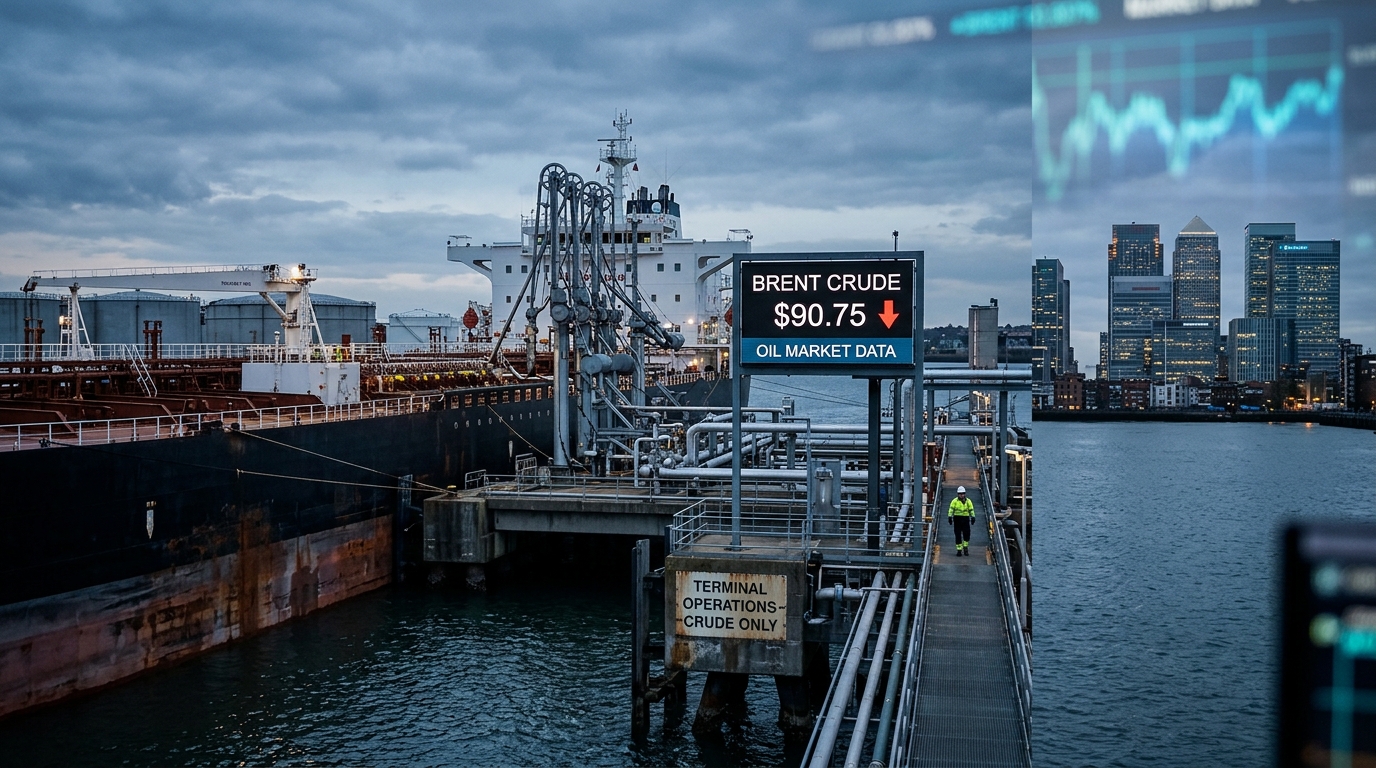
Monday’s best macro development had nothing to do with artificial intelligence. Brent crude’s price dropped 5.85%, and that single move did more to lift sentiment across the market than any chip headline could have managed. US stocks rallied as the drop in oil prices tempered inflation fears and helped the S&P 500 rebound from its biggest weekly drop since April 2025. The strength came even though Nvidia, one of Wall Street’s most influential stocks, sank. When cheaper oil beats the AI trade as a market driver, that tells you something about where the real risk premium had been hiding.
The catalyst was straightforward. Trump went further Monday after meeting Qatar’s prime minister, saying he does not believe that additional military action against Iran is necessary for now. “At this point, it won’t be necessary, taking the military action,” he told reporters in a White House briefing room appearance. His remarks came as an indication that he is winding down the conflict after Republicans’ midterm election losses underscored its deep unpopularity. “Iran, militarily, is effectively over,” Trump told reporters.
Brent has dropped about 22% from a six-month high of $118 reached on October 30 as fears of intensified US action against Iran have eased. On Tuesday, the slide continued. Brent crude futures were down 1.7% at $90.99 a barrel, while WTI futures slipped 1.8% to $85.20 a barrel. Recovering regional oil flows and reports that Iran may soften its position on the Strait of Hormuz have eased concerns about supply shortages, according to analysts.
What the Market May Be Missing
Here is where the read gets more complicated. Trump’s optimism exists in direct tension with his own secretary of state. Hopes of a deal are being tempered by Washington, with Secretary of State Marco Rubio saying Sunday that he “wouldn’t say we’re at the verge of a breakthrough.” Rubio suggested that talks have not been productive “because the Iranian demands are simply not just unacceptable, but in some cases outrageous and ridiculous and really not realistic.” Trump also maintained that “the military action doesn’t seem to be a very necessary thing, but we’re locked and loaded, ready to go for any reason that changes.”
Oil and the S&P 500 have moved in opposite directions more often in 2026 than in any year since at least 2001. That inversion matters: falling oil is now a stimulus for the broader market, not a warning. But it also means energy names carry a different kind of risk than they did a year ago.
Where It Shows Up
Energy producers have already absorbed enormous losses from the oil slide. Over the week ended November 6, Exxon Mobil lost 11.4% and Chevron fell 9.7%. Marathon Petroleum fell 9% and Valero Energy dropped 7% on Wednesday of that week. XLE, still 2026’s best-performing sector, up about 40% for the year, has fallen 12% from its October 30 high in four sessions.
Monday told a split story within energy. Chevron edged up 0.86%, while Exxon Mobil fell 0.69% and Occidental Petroleum declined 1.10%, with Valero rising 2.97% as refining margins improve when crude input costs drop. The divergence is real: integrated majors and pure-play producers face revenue pressure from lower Brent, while refiners get a cost tailwind.
That refiner-versus-producer split has been building for months. Marathon and Valero each posted record quarterly earnings when diesel crack spreads hit all-time highs above $100 a barrel, a margin environment that now reverses as crude input costs fall.
Exxon is up 38% and Chevron up 39% in 2026, on a war that sent oil above $100 a barrel and turned refining into a gold mine, with indicative refining margins averaging $50.3 a barrel in the third quarter, against $18.3 in the fourth quarter of 2025. With Brent now below $91, those refining margins compress quickly for producers but widen for standalone refiners like Valero.
Risks and Counterpoints
The bull case for energy stocks rests on one premise: the market has already priced in too much pessimism. Trump struck a more conciliatory tone about Iran, saying it’s “highly unlikely” he will order extensive strikes, though that depends on Iran signing “a very strong agreement.” Iran’s rejection of Trump’s framing that the conflict is “effectively over” keeps a floor under geopolitical risk. Any tanker incident in the Strait of Hormuz, or a breakdown in the Qatar-mediated talks, could send Brent back above $100 within days.
What to Watch Next
The gap between Trump’s optimism and Rubio’s caution is the single most important variable for oil this week. Watch whether Iran’s negotiators engage substantively with Qatar’s mediation framework, and whether Hormuz traffic data shows continued normalization. For equity investors, Valero’s forward guidance deserves more attention than it is getting: refiners are the one part of energy that benefits cleanly from this price environment, and the market has not fully separated that signal from the broader sector selloff.