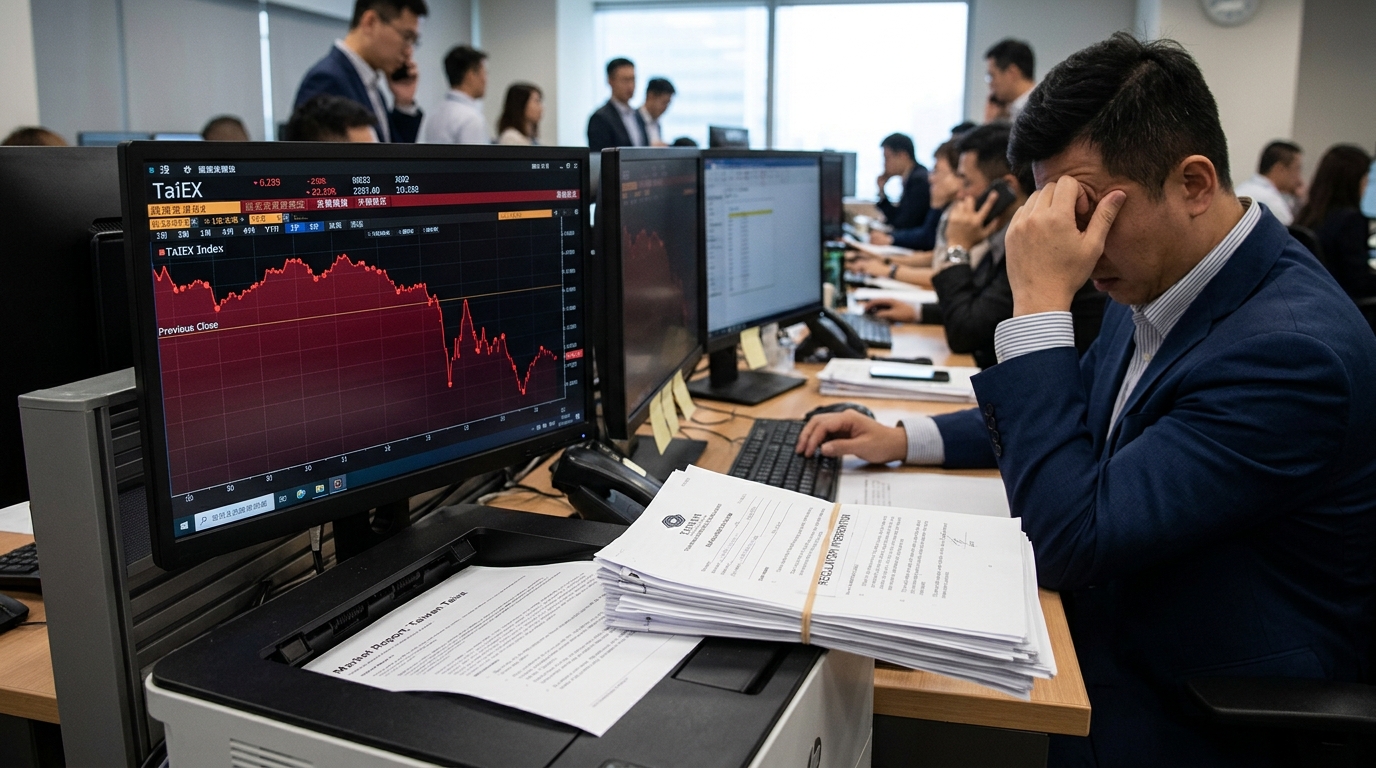
There is a point in any selloff when official intervention stops being reassuring and starts being diagnostic. Taiwan’s regulators crossed that line this week.
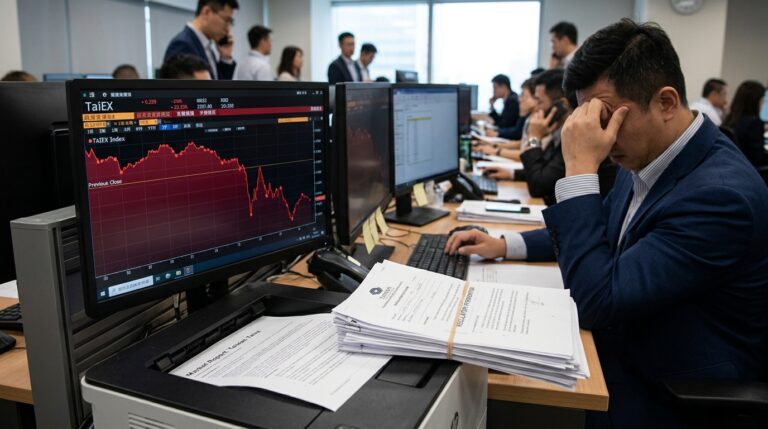
The Taiex fell as much as 7.0% on Friday and finished the session down 6.2% at 36,033.29, taking its loss for the week to 17.5%. That was Taiwan’s steepest weekly percentage drop since 1990, according to Reuters. The curbs went on. The market went down anyway. That sequence matters more than the number itself.
What Actually Moved
Beginning November 9, the daily limit on intraday short-sale orders using borrowed securities was cut from 30% to 3% of a stock’s average daily trading volume, and the minimum margin requirement for short sales rose from 90% to 130%. A second tightening followed on November 19, when Taiwan’s Financial Supervisory Commission said additional measures would take effect Friday, including cutting that borrowed-share intraday short-sale limit again, from 3% to 1% for affected trades. The Taiex still fell sharply on the morning the new curbs took effect.
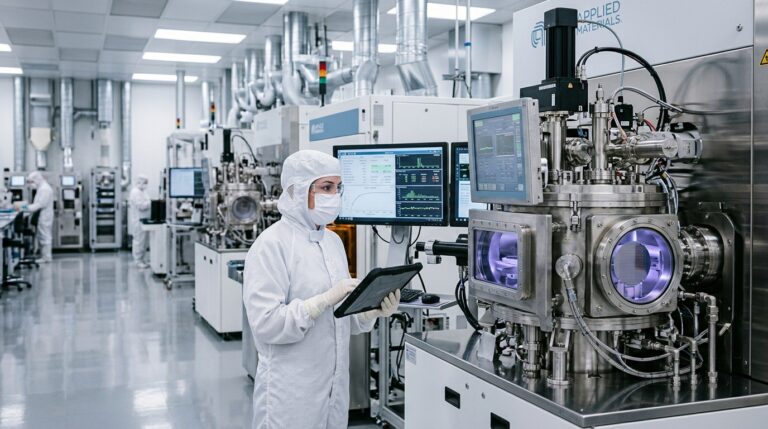
In Taipei, TSMC fell to a more than seven-month low, while MediaTek dropped nearly 10%. These are not companies operating in distress. TSMC’s chairman and CEO C.C. Wei told investors on October 15 that demand remained higher than supply; Foxconn said on November 12 that AI servers had become its most significant growth engine. The fundamentals were not revised. The prices were.
Why It Happened
The proximate driver is a broad unwinding of AI-related positions. Investors have unwound AI-related bets amid concerns about valuations, profitability and rising debt. But the structural cause is a foreign-investor exodus that predates this week by months. Short-selling restrictions do not address that kind of pressure. They were the wrong instrument for this problem.
What the Market May Be Missing
Since its October 6 record high, the Taiex has fallen nearly 28%, erasing about $1.12 trillion in value, according to Reuters, citing LSEG-compiled data. The popular reading is that this is an AI sentiment correction. The more troubling reading is that something structural has shifted in how global capital allocates to Taiwan’s market. When the instrument of intervention is short-selling controls and the dominant force is foreign outflows, the controls are essentially addressing the wrong actor.
Korea confirmed the same dynamic. The Taiex closed down 6.2% on Friday, while South Korea’s KOSPI closed down 5.2% at 4,869.96 and Japan’s Nikkei 225 dropped 5.1% to 56,436.65, a seven-month low. As declines widened in Seoul, sell-side trading curbs were triggered on both the KOSPI and KOSDAQ, temporarily halting program sell orders. South Korean households likely lost about 563 trillion won ($383 billion) on stock investments in the second half of this year, and Citi estimates the drag on consumption could match a 0.50 to 0.75 percentage point increase in the policy rate.
Risks and Counterpoints
The case against staying bearish is real. Some analysts view the Kospi’s levels around 5,000 as an attractive entry point, with chip stocks worth buying on dips. Taiwan also has a National Financial Stabilization Fund with NT$500 billion in authorized capacity, which officials have indicated is ready to be deployed if needed. And neither TSMC nor Foxconn has announced output cuts, meaning this week reflects a shift in expectations, not confirmed deterioration in business activity.
What to Watch Next
The first real test is whether Monday’s session in Taipei stabilizes or extends the break. Watch TSMC’s US-listed shares for divergence signals between the ADR and the local market. Any activation of Taiwan’s stabilization fund would shift the character of the intervention significantly. And watch the MSCI EM Asia index: Reuters reported that MSCI’s index of Asia-Pacific shares outside Japan was down 8.3% for the week, its worst since March 2020. If that index holds its level next week, the foreign-flow pressure may be exhausting itself. If it does not, the curbs will face a third test.