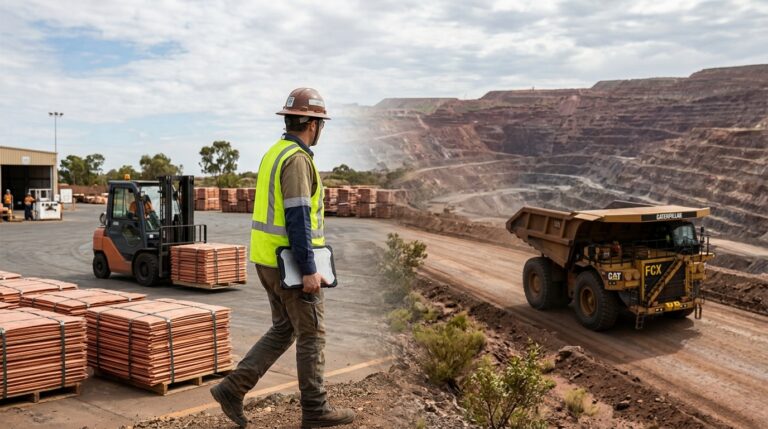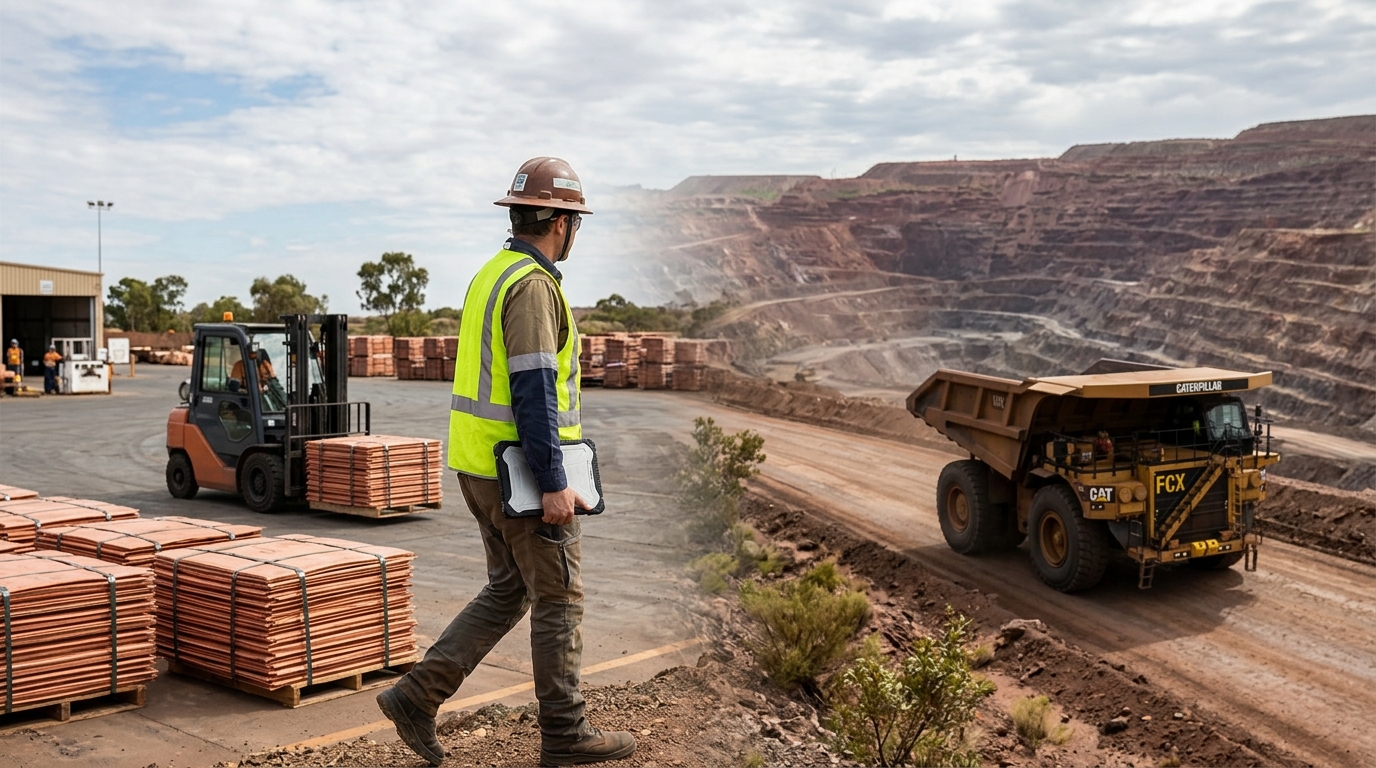
Freeport-McMoRan dropped its Q3 results before the open this morning, and the numbers land in a copper market that can’t make up its mind. Copper itself sits near $6.57 a pound on COMEX, close to September’s record highs in both New York and London. Meanwhile, exchange warehouses are bursting. LME copper stocks rose roughly 20% in the week ending October 23, reaching 273,750 tonnes, while COMEX warehouses in the U.S. held roughly 700,000 tonnes in October. That is the tension traders need to resolve before deciding whether FCX at about $65 is the right vehicle, or whether the metal itself is the cleaner expression.
On the operational side, FCX met production expectations. Third-quarter consolidated copper output came in at approximately 830 million pounds, with gold at roughly 230,000 ounces. Neither number surprised. What matters more for the cash translation: copper sales were guided to approximately 750 million pounds, about 80 million below production, and gold sales landed around 100,000 ounces after about 60,000 ounces of refined gold were deferred from Q3 into Q4 due to Indonesian timing. That deferral likely pushed unit net cash costs above the company’s $2.00 per pound estimate. FCX said realized copper prices were above $6.50 a pound, which cushions some of that cost pressure, but the gold drag is a real earnings headwind that will show up in today’s numbers.
At Grasberg, the phased recovery is tracking the company’s own timeline without breaking away from it. Mill throughput averaged roughly 140,000 metric tons of ore per day during Q3, approximately 67% of normalized pre-incident rates. The material handling system upgrades remain on schedule for early 2027, Production Block 1S is targeted for mid-2027 restart, and FCX continues to project 80% capacity by mid-2027 with near-full recovery by year-end 2027. The Eastern Java smelter, shut after the September 2025 incident, successfully restarted in late August. Progress, but none of it accelerating the timeline.
Wall Street expects EPS of roughly $0.74 to $0.83 on revenue of approximately $7.4 billion, with revenue up sharply year over year at the high end of that range. The bar is high, and the gold deferral creates downside risk relative to that bar.
Here is the question that matters for positioning: the COMEX inventory surge is largely tariff-driven pre-positioning, not evidence of slack physical demand. Goldman Sachs has characterized it as stranded supply rather than a global glut, and the LME cash premium over three-month metal supports that read. If that framing holds, copper near $14,300 to $14,500 a tonne remains a legitimate long.
But FCX at about 32 times trailing earnings, against RIO near the mid-teens, prices in an aggressive Grasberg ramp that is still more than a year from completion. Southern Copper (SCCO) continues to post best-in-group profitability metrics and operates without the volume constraints FCX carries while Grasberg recovers.
The metal itself, via a copper futures position or COPX, sidesteps the Grasberg discount entirely. For traders who are genuinely bullish on copper prices holding above $14,000, that may be the tighter trade until Grasberg exits recovery mode.
What to watch: FCX’s realized cost per pound and whether management revises Q4 copper and gold sales guidance given the Indonesian deferral. Any language on accelerating the Grasberg haulage upgrade could shift the stock’s premium toward justified.