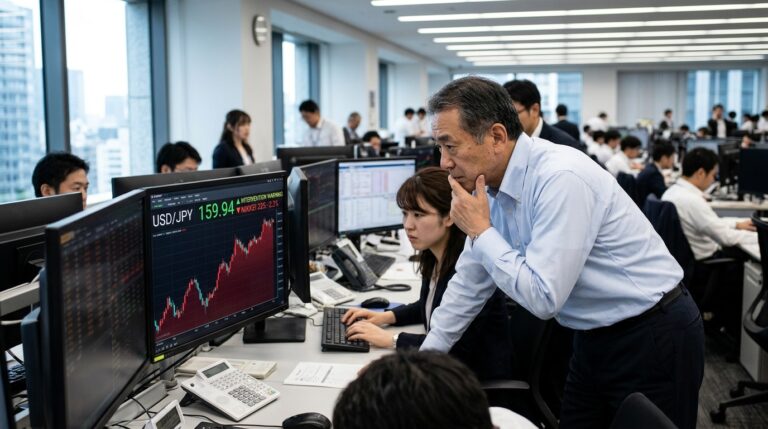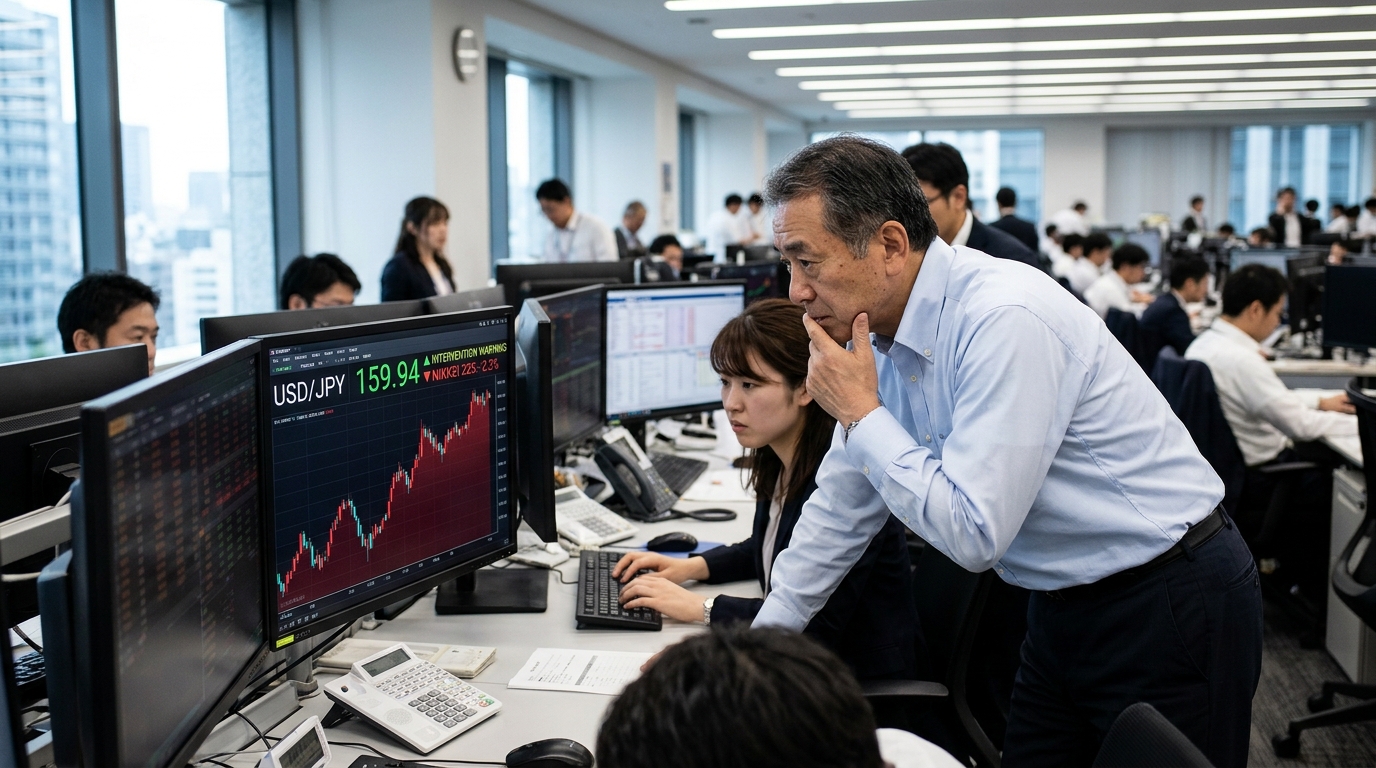
The currency market delivered its verdict on Tuesday’s US inflation data overnight, and the yen bore most of the cost. Japan’s top currency diplomat Atsushi Mimura warned that it was “too early” to forget this summer’s yen-buying interventions as the yen weakened to 159.94 per dollar. That is the highest level in more than two months, and it puts USD/JPY within a few pips of a level that has twice this year drawn real action from Tokyo.
Both stocks and Treasuries dropped after a hotter-than-expected October CPI report showed headline monthly inflation up 0.4% and core up 0.3%, and Fed rate hike odds rose on the news. After CPI and Waller’s remarks, chances of a rate hike next month hit 100%, according to the CME FedWatch Tool, versus 84% Monday. The 10-year Treasury yield, which traded above 5% before paring gains, is holding at roughly 4.99% today. The dollar index rose 0.79% to 103.041. Every piece of this combination is bad for the yen: wider rate differentials, a stronger dollar, and a Fed that is nowhere near finished.
What Tokyo Said, and What It Means
Mimura’s language Thursday was precise in the way that matters for markets. In his first remarks on foreign exchange since late September, Mimura said he believed recent currency moves have been excessively rapid. He also said it is “too early” to forget what happened this summer, referring to yen-buying intervention operations aimed at stemming the yen’s depreciation. Both phrases belong to a recognized sequence. In 2026, that kind of language has preceded both interventions.
The scale of those interventions gives the warning weight. Japan bought yen twice this year: ¥11.73 trillion from April 28 to May 27, and ¥15.39 trillion from July 30 to August 26. The total amount of ¥15.39 trillion over that late July to August period marked Japan’s largest monthly spending on yen-buying intervention. Markets know Tokyo can and will spend at scale.
Mizuho Securities analysts said the dollar was likely to continue rising against the yen, citing the resilience of the US economy and persistently elevated inflation. They added that Tokyo could intervene unilaterally if the dollar breaks above 160 and yen weakness fuels inflation, increasing the risk of declining support for Prime Minister Sanae Takaichi’s government.
The Nikkei Is Listening
The equity market in Tokyo confirmed that the yen story is not contained. Japan’s Nikkei 225 fell about 429 points, or 0.7%, to close at 60,819 on Thursday, November 12, ending a three-day winning streak. The index had spent Monday through Wednesday recovering from its worst week since March 2020, so the reversal carries meaning. A yen near 160 is a problem for Japan’s import-heavy economy in a way that tends to outweigh any export benefit: the weak yen has been a headache for Japanese policymakers as import costs have surged, and the yen-based import price index jumped 24.8% in October from a year earlier.
The Part the Crowd May Be Missing
The standard read is that verbal warnings slow a move but rarely reverse it while US yields remain elevated. That is probably right as far as it goes. What it misses is the policy collision now forming on both sides of the Pacific. OIS pricing implies an 84% chance of a 25bp Bank of Japan hike at the December 17 meeting. The Fed and the BOJ are moving in opposite directions simultaneously, and the yen is the pressure valve. Each new US inflation surprise that makes December’s Fed hike more certain also makes December’s BOJ hike look less able to close the gap.
Risks and Counterpoints
The case that 160 holds without intervention rests on two things: first, that Tokyo acts as threatened, and second, that the Fed’s hawkishness is already priced. A firmer escalation in official language, or signs of US backing like the coordinated operation earlier this year, would raise the odds of a sharp drop in USD/JPY. The counterargument is that verbal intervention alone has a short shelf life when the rate differential keeps widening. Verbal warnings tend to slow the move rather than reverse it, especially while US yields keep rising.
What to Watch Next
Friday’s US Producer Price Index reading will tell markets whether Tuesday’s CPI surprise is becoming a trend or was driven by one-off components. Any upside shock adds further pressure on USD/JPY. On the Japanese side, watch whether Mimura or Finance Minister-level officials escalate the language from “too rapid” toward the more explicit warnings that preceded April and July’s actual purchases. The BOJ’s December 17 meeting is the larger event: a hike to 1.5% would be the first concrete narrowing of the rate gap, but it arrives four days before Christmas, and by then 160 may already be settled history.